Winter Storage | October 2026
TL;DR
- A bike parked on its tires all winter puts its full weight on two small patches of rubber for 4 to 6 months straight.
- That leads to flat spots, cracking in the contact patch, and pressure that keeps dropping as the garage gets colder.
- Continental's own motorcycle tire guidance says to store the bike on a stand or motorcycle jack so no weight sits on the tires.
- Most cruisers and baggers don't have a center stand, so they sit on a kickstand all winter, leaning in the most crowded garage of the year.
- A dolly fixes both problems: tires off the ground, bike upright on its frame, and you can still roll it wherever you need it.

Your tires are the only thing touching the road. Two patches of rubber, front and rear, holding up 800-plus pounds of bike and rider through every corner and every panic stop.
Then October hits, the bike gets parked, and those same two patches sit pressed into a cold concrete slab until April.
Most riders don't think about it. They change the oil, hook up the tender, throw the cover on, and walk away. Then spring comes, and the first ride feels a little off. A thump at low speed. A vibration that wasn't there in September. A sidewall that looks older than it should.
Here's what actually happens to tires that sit all winter, and why getting the bike off the ground matters more than most people realize.
What Happens to Tires That Sit on Concrete All Winter
We dug through tire manufacturer guidance, Harley-Davidson's own storage advice, and a lot of forum threads from guys who learned the hard way. Here's what we found.
01Flat spots
When a tire carries weight in one spot for months, the rubber and the cords inside it take a set in that shape. Most of the time, a mild flat spot works itself out after some miles once the tire warms up and flexes. But leave it long enough and it can become permanent. A permanent flat spot doesn't always look obvious. It shows up as a vibration or shake at a certain speed that never goes away.
Plenty of cruiser and touring tires use bias-ply construction, and riders who've stored both types will tell you bias tires take a flat spot more easily than radials.
02Cold makes the rubber stiff
Cold storage makes flat spotting worse. When rubber gets cold, it stiffens up and is more likely to stay stuck in that flattened shape. An unheated garage in Michigan, Iowa, Wisconsin, or anywhere up north spends months below freezing, and the slab under your tire is one of the coldest things in the building.
03Tire pressure keeps dropping
Two things pull air pressure down over the winter. Tires naturally lose roughly 1 psi a month just sitting. On top of that, pressure drops about 1 psi for every 10 degrees the temperature falls. Less air means the tire squats harder into the floor, which makes the flat spot deeper.
Rough math:
Set your tires to 40 psi in a 70°F garage in October.
By January it's 20°F in there. That 50-degree drop costs you about 5 psi.
Three months of normal seepage costs about 3 more.
You're sitting in the low 30s, under full load, for the coldest part of the year.
04Cracking right where the tire touches the floor
Tires have protective waxes and oils mixed into the rubber. When a tire rolls and flexes, those work their way to the surface and help protect it. When a tire sits still, that stops. That's why Continental recommends moving a bike every month if it has to sit on its tires, specifically to cut down on ozone cracking in the contact area.
And garages are full of ozone sources. Anything with an electric motor puts it out: the furnace, the air compressor, a sump pump, a generator. Ozone attacks rubber and is one of the fastest ways to get sidewall cracking.
05What's on the floor matters
Let's be straight about one thing. The old saying that concrete "sucks the life out of tires" is mostly a myth. Concrete itself isn't eating your rubber.
The real problems are what's on and around the slab. Oil drips, gas, coolant, brake cleaner, and solvents all break down rubber, and garage floors collect all of them. Snowmelt and road salt drip off the car all winter. And in an unheated garage, a cold slab can sweat with condensation, which keeps the bottom of your tires sitting in moisture.
06Your suspension holds the full load the whole time
It's not just the tires. When the bike sits on its wheels, the springs and shocks hold the full weight of the bike for months without a break. Get the bike up on its frame and that load comes off too.
What the tire makers say: Continental's motorcycle tire storage guidance says that if possible, store the bike on the main stand or on a motorcycle jack to remove all weight from the tires. If it has to sit on its tires, move it every month. Harley-Davidson gives the same advice: use a stand, or move the bike and rotate the tires at least once a month.
The Problem: Your Bike Doesn't Have a Center Stand
Harley's own winter storage guide tells you to put the bike on a center stand. Great advice. Except most Harleys and Indians, especially the big touring bikes, don't have one.
So the bike ends up on the kickstand. All winter. That means the full weight sits on the tires and leans to one side, and you're counting on one small foot of steel to hold up a bagger for five months.
The winter garage is the most crowded garage of the year
In the summer, the bike is out on the road and the car sits in the driveway. In the winter, everything comes inside. The car pulls all the way in. The snowblower needs a spot. The salt bucket, the shovels, the kids' stuff, the boxes from the holidays. Your bike gets pushed into a corner and everyone walks around it.
That's when bikes get knocked over:
- A car door swings open into it.
- Someone backs the snowblower out and catches the bars.
- The kickstand foot slides on a slab wet with snowmelt.
- Someone bumps the cover, grabs it to catch their balance, and pulls the bike right over.
A tip-over on a touring bike means bent levers, broken mirrors, scuffed saddlebags, and cracked fairings at the least. And if you're standing next to it when it goes, your instinct is going to be to catch it. Don't. That's how people get hurt.
"Just roll it every few weeks" sounds easy until you try it
Moving the bike monthly is the backup plan for a reason. It helps. But think about what it actually means: lifting 800-plus pounds off the kickstand, rolling it forward a couple feet in a packed garage, and setting it back down without hitting anything. Every single month, in the cold. Most people don't do it, and every time you do it, you're risking the exact tip-over you're trying to avoid.
Putting boards or carpet under the tires doesn't solve it either. It might help with moisture, but the tire is still carrying all the weight in one spot. The only way to stop a flat spot is to take the weight off the tire completely.
Off the Ground, Upright, and Still Movable

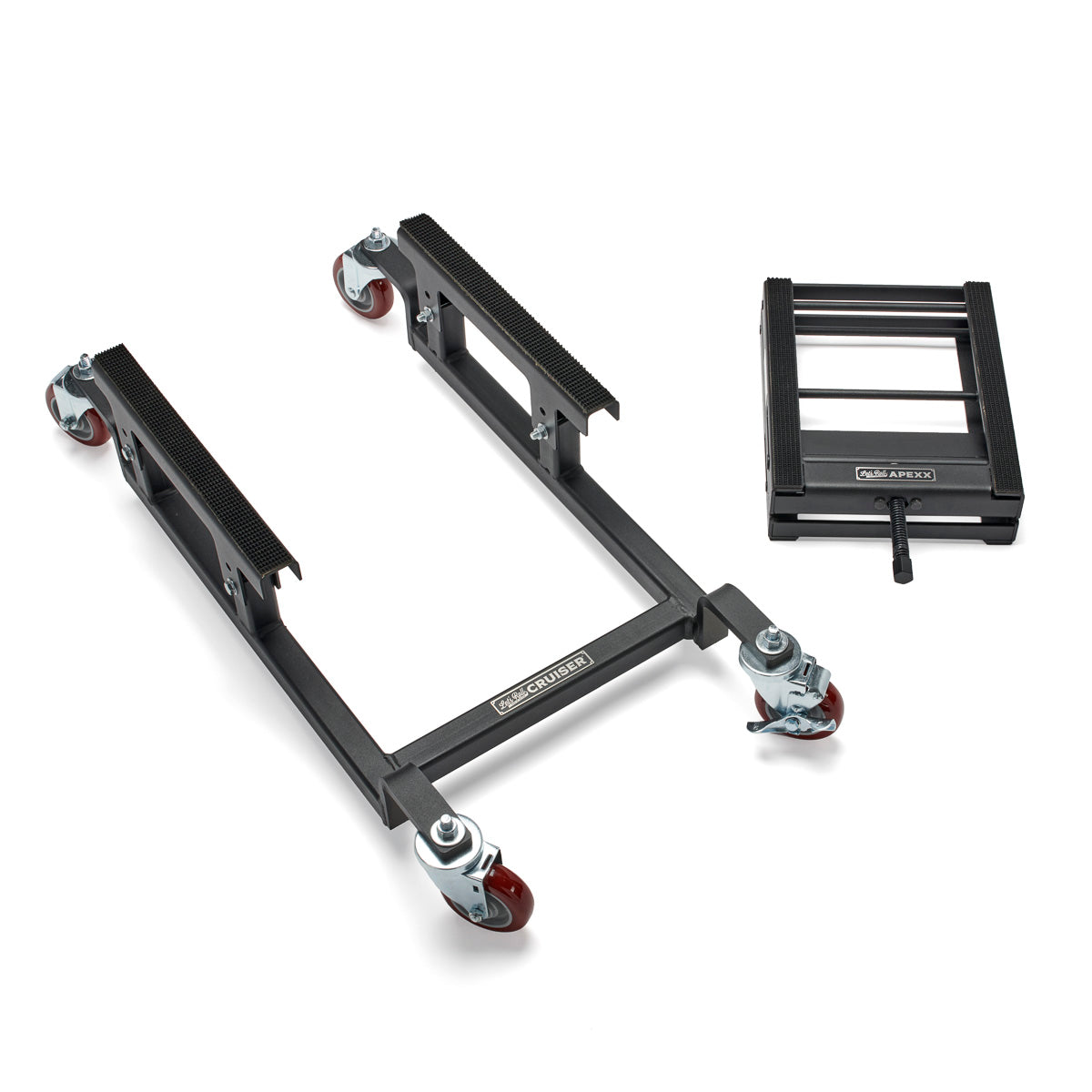
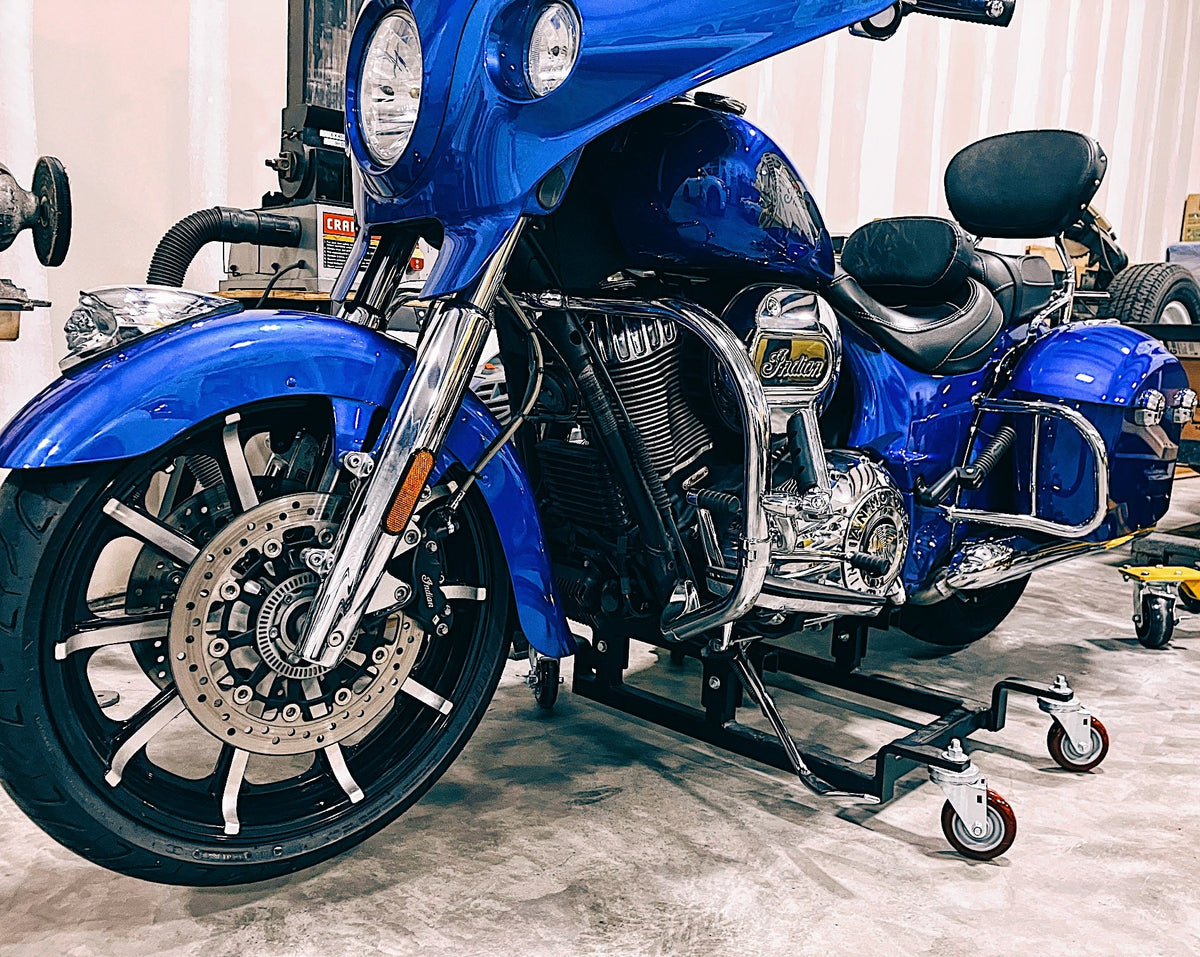
This is exactly what the Let's Roll Cruiser Dolly is built for. Your bike sits on its frame on the dolly, not on its tires and not on its kickstand.
- Both tires off the ground. No weight on the rubber means nothing to flat spot, and the contact patch isn't pressed into a cold, wet, or oily floor for five months.
- Weight off the suspension. The bike rests on its frame.
- Upright, not leaning. The bike sits straight up on industrial rubber crossbars that grip the frame. No straps and no tie-downs needed.
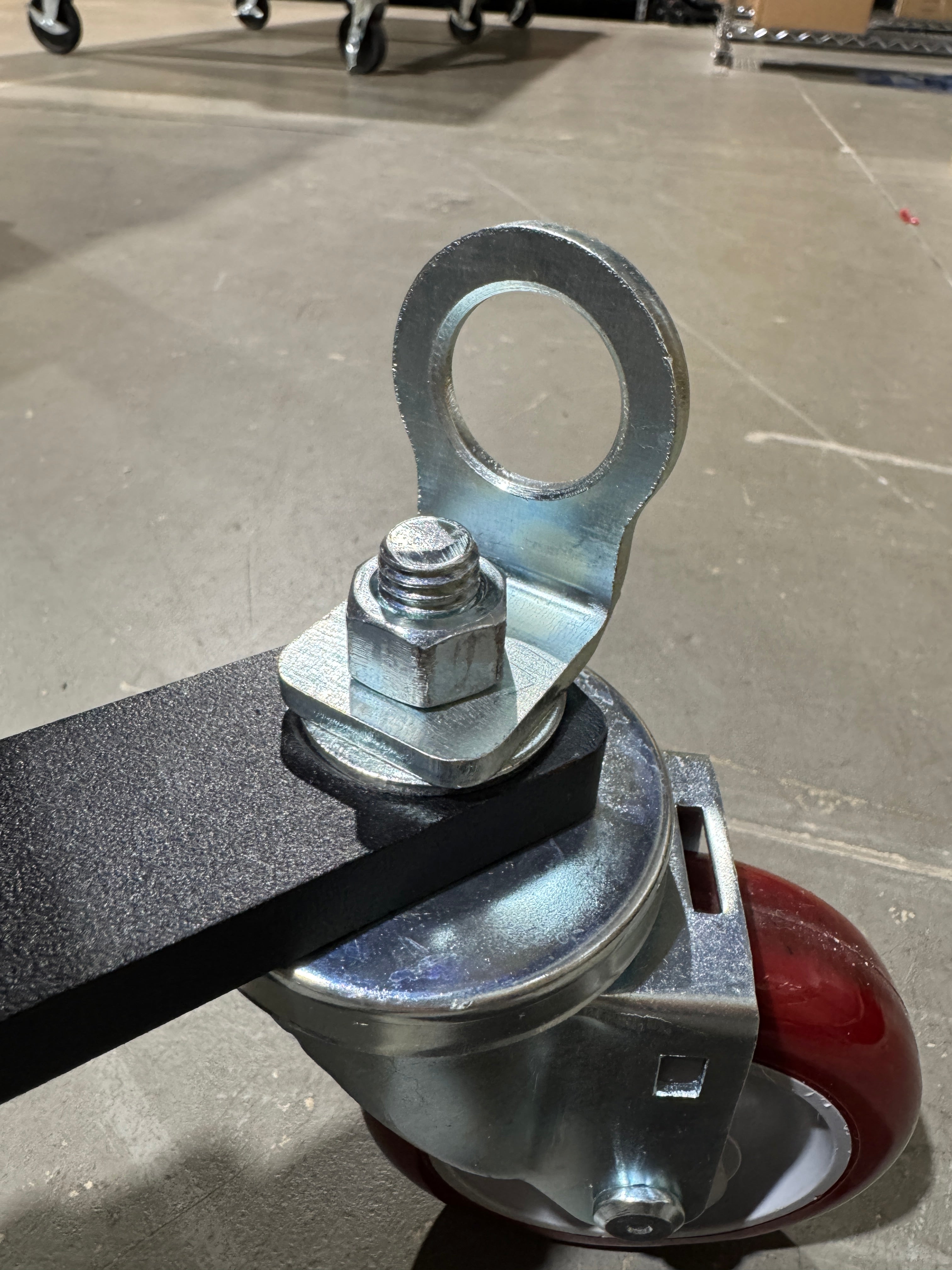
- Locks in place. Two of the ball-bearing casters have brakes built in, so it stays put when you want it to.
- Still moves when you need it to. Roll it sideways against the wall, spin it into a corner, or push it out of the way when the car needs to come in. The Zero-scuff™ 4" urethane wheels won't mark epoxy and don't get hung up on concrete seams.
- Rated to 1,100 lbs. Built for heavy cruisers and touring bikes.
Getting the bike onto the dolly is the jack's job. The Standard Jack and Apexx Jack sit just 3.85" tall collapsed, so they slide under the frame while the bike is still on its kickstand. Crank it up, roll the dolly under, set it down. One person can do it.
And since the bike can roll, you can actually get to it all winter. Check tire pressure. Spin the wheels and look for cracks. Work on it. Then push it back into its spot.
Winter Tire Checklist
Before the bike goes away
- Wash the tires and wheels to get road grime, brake dust, and salt off the rubber.
- Look over both tires for cracks, cuts, embedded objects, and worn tread.
- Set pressure to the spec in your owner's manual.
- Skip the tire shine. Dunlop and Continental both say dressings can do more harm than good in storage.
- Clean up any oil or fuel spots where the bike will be parked.
- Park as far as you can from the furnace, air compressor, sump pump, or any other motor.
- Get the bike up on a dolly so both tires are off the floor.
When spring comes
- Check pressure cold and set it back to spec before you ride.
- Spin both wheels and look closely at the sidewalls for cracking.
- Check the DOT date code on each sidewall. The last four digits are the week and year it was made.
- Take the first few miles easy and pay attention to any vibration that doesn't go away.
Want the full spring list? Our Spring Setup Checklist covers the rest.
Get It Off the Floor This Winter
A jack to get it up. A dolly to hold it there. Packages save $30 over buying separately.
Apexx Package
$834
Apexx Jack + Cruiser Dolly. Replaceable ball-bearing screw for heavy, frequent use.
Shop NowFit check: you need 17" of clear frame between the wheels with nothing hanging below it. Riding an Indian? See the Indian Motorcycle Adapter Plate.
Frequently Asked Questions
Does concrete ruin motorcycle tires?
Not by itself. The bigger problems are weight sitting on one spot of the tire for months, cold temperatures that stiffen the rubber, oil and chemicals on the floor, moisture from a cold slab, and ozone from nearby motors. Getting the tires off the floor takes care of most of that.
Will flat spots go away on their own?
Mild ones usually do after a few miles once the tire warms up. But a tire that sits under load long enough, especially in the cold, can develop a flat spot that doesn't come back. That shows up as a vibration at certain speeds that won't go away.
Can I just leave my bike on the kickstand all winter?
You can, but it's the least protective option. The tires carry all the weight in one spot, the bike leans for months, and it's easier to knock over in a crowded winter garage. If it has to sit on its tires, tire makers and Harley-Davidson both say to move it at least once a month.
Should I overinflate my tires for winter storage?
If the bike is sitting on its tires, Continental says it's okay to inflate up to the max pressure on the sidewall during storage. Just set it back to your normal riding pressure before you ride. If the bike is on a dolly with the tires off the ground, keep them at normal pressure and check them in the spring.
Do I need straps or tie-downs on the Cruiser Dolly?
No. The bike sits upright on its frame on industrial rubber crossbars that grip it. No straps or tie-downs needed.