
The first warm weekend of the year always arrives faster than expected.
One good forecast. A dry road. A free afternoon. Suddenly everyone wants to ride — immediately.
That’s also when problems show up.
Low tire pressure. Weak batteries. Sticky controls. Gear that doesn’t feel right anymore. Bikes that technically “run,” but don’t feel ready.
Spring riding doesn’t fall apart because riders forget how to ride. It falls apart because prep gets rushed.
This checklist isn’t about turning your garage into a full shop. It’s about removing friction now, while there’s no pressure, so when riding season opens up, everything feels familiar, smooth, and confidence-inspiring.
Start With the Right Mindset: Prep Is About Reducing Friction
Spring setup isn’t about perfection. It’s about ease.
Anything that makes it harder to inspect your bike, move it, or work around it will get skipped when excitement kicks in. Riders don’t skip checks because they don’t care — they skip them because the process feels inconvenient.
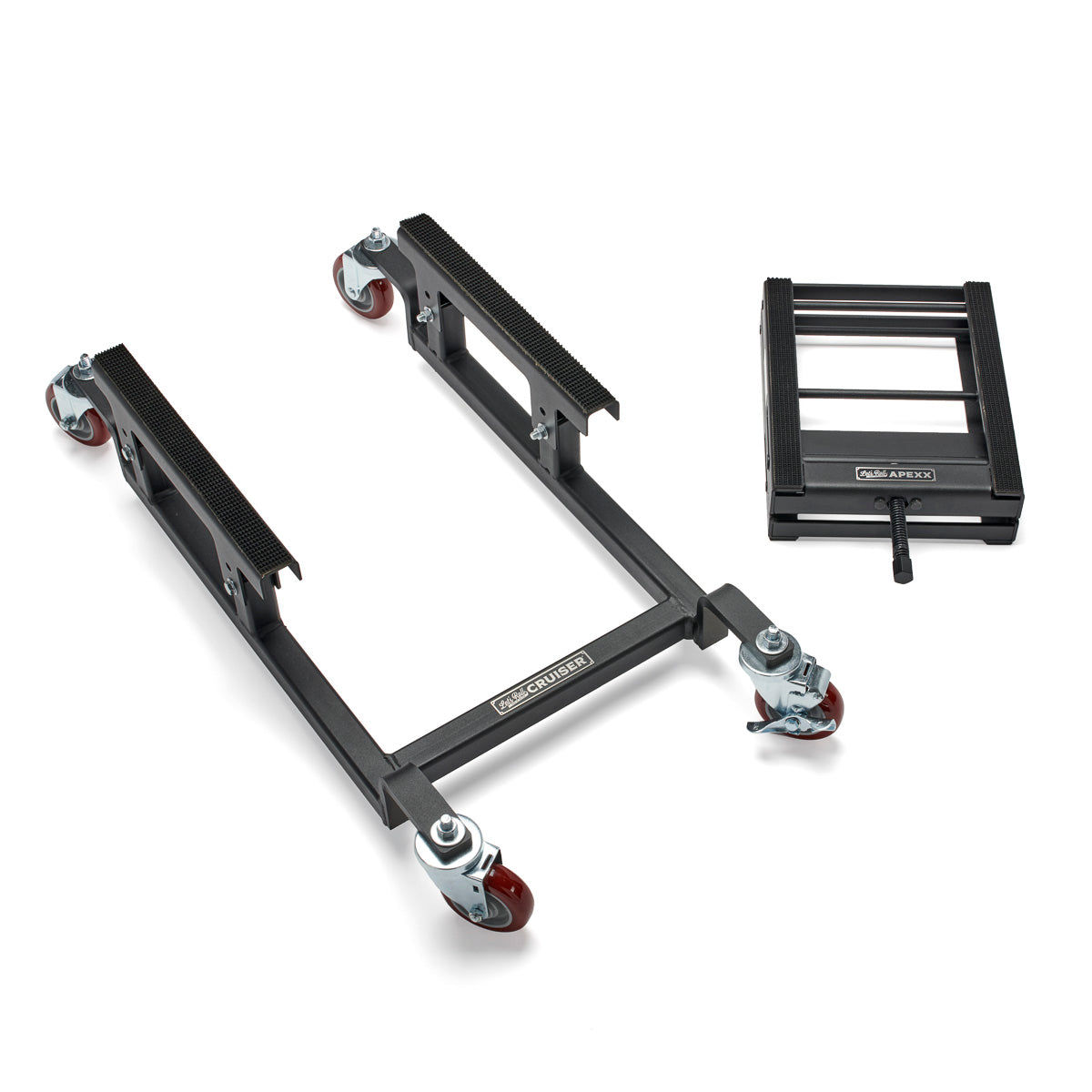
When the bike is easy to position, stable to inspect, and simple to move, riders naturally slow down and do things right.
That tone carries into the ride itself.
Tires: The Most Overlooked Spring Problem
Check Pressure Before You Ride, Not After
Cold temperatures reduce tire pressure. Bikes that sit all winter almost always lose air, even if they looked fine when parked.
Riding on underinflated tires affects handling immediately, especially on early-season pavement that’s still cold and dusty.
Pressure checks are quick — but only if the bike is easy to access and positioned comfortably. When you’re not fighting balance or awkward angles, you’re far more likely to check both tires carefully instead of rushing.

Inspect the Entire Tire, Not Just What’s Visible
Winter storage hides problems.
Flat spots, early cracking, and embedded debris often sit on sections of the tire you never see unless the wheel is rotated. Many riders glance at the visible portion and assume everything’s fine — until vibration shows up on the road.
Being able to roll the bike smoothly or rotate the wheels while it’s lightly lifted makes a full inspection part of the process instead of something that feels like extra work.
Catch Flat Spots Early
Bikes that sit in one position for months can develop subtle flat spots. These don’t always look dramatic, but they show up as vibration, uneven braking feel, or instability once speeds increase.
Catching this early saves frustration later — especially on that first long spring ride.
Battery and Electrical: Avoid the Non-Start
Spring is when weak batteries reveal themselves.
Test Cold Starts Now
A bike that starts once doesn’t always start twice. Cold storage is hard on batteries, especially if they weren’t maintained consistently.
Test:
-
Cold starts
-
Headlights at idle
-
Dash behavior during cranking
Doing this calmly, with the bike positioned securely and access unobstructed, makes troubleshooting far easier than discovering issues in a parking lot.
Inspect Connections
Look for corrosion, loose terminals, or brittle wiring. These small issues are easier to spot when you’re not leaning awkwardly or working around a bike that wants to tip or roll.
Fluids: Quick Checks That Prevent Big Headaches
Oil and Coolant
Check oil level and condition. If the bike is due for a change soon, doing it before riding season starts means you’re not burning early miles on old oil.
For liquid-cooled bikes, confirm coolant levels and scan for leaks.
Elevating the bike slightly or positioning it squarely makes these checks faster and cleaner — especially when visibility matters.
Brake Fluid and Clutch Feel
Squeeze the levers. Feel matters.
Spongy brakes or inconsistent clutch engagement don’t improve with riding. These issues are easier to diagnose when you can stand comfortably, see clearly, and work without rushing.

Controls and Contact Points
Throttle, Clutch, and Brakes
Controls should move smoothly and return cleanly. Any stiffness, hesitation, or uneven feel deserves attention now, not on your first spirited ride.
Cold storage can dry out cables or expose wear that wasn’t noticeable last fall.
When the bike is stable and positioned well, small adjustments feel simple instead of frustrating.
Bars, Pegs, and Mirrors
Check alignment and tightness. Winter temperature swings can loosen hardware just enough to cause vibration or annoyance later.
These checks are quick — when access is easy.
Chain or Belt: Clean Before Riding Hard
Spring riding exposes drivetrain neglect quickly.
Chains should be:
-
Clean
-
Properly tensioned
-
Free of rust or tight spots
For belt or shaft drives, check alignment and visible wear.
This is much easier to do when the bike can be positioned for access instead of being awkwardly leaned or partially blocked.
Suspension and Brakes: Trust What You Feel
You don’t need to adjust settings unless something feels off — but you do need to confirm nothing has changed.
Bounce the suspension. Roll the bike slowly. Apply brakes gently.
If something doesn’t feel like it did last season, trust that instinct and investigate before pushing pace.
Comfort during inspection leads to confidence on the road.
Gear Check: Don’t Assume Last Year’s Setup Still Works
Spring riding often exposes gear issues immediately.
Helmet and Visor
Clean the visor. Check seals and mechanisms. Fogging issues and worn padding become obvious early in the season.
If the helmet feels looser than it used to, that’s not your imagination.
Gloves and Layers
Cold mornings and warm afternoons demand flexibility. Make sure gloves fit properly and your layering system doesn’t restrict movement.
Comfort off the bike translates directly to patience and focus on it.
Comfort Prep Is Riding Prep
One of the biggest spring mistakes riders make is treating comfort as optional.
Rushing prep, fighting the bike, or skipping checks because positioning feels awkward all create tension that carries into the ride.
When the bike is easy to:
-
Inspect
-
Rotate
-
Adjust
-
Move safely
Riders naturally slow down, do things properly, and start the season calm instead of frantic.
That ease matters — not because it’s fancy, but because it prevents shortcuts.
Do a Short Shake-Down Ride
Before committing to a long spring ride, take a short local loop.
Pay attention to:
-
Throttle response
-
Brake feel
-
Clutch engagement
-
Comfort and noise
-
Anything that feels unfamiliar
Make adjustments while the excitement is still manageable.

Plan the First Real Ride Ahead of Time
The first warm weekend always feels urgent. Planning removes pressure.
Decide:
-
Where you’re going
-
How long you’ll ride
-
When you’ll stop
Riders who plan enjoy those first rides more because they’re not rushing to “make the most of it.”
Why Doing This Now Pays Off
When spring hits suddenly, prepared riders ride. Unprepared riders scramble.
Scrambling leads to skipped checks. Skipped checks lead to avoidable problems. Avoidable problems shorten rides — or end them.
Spring setup isn’t about being cautious. It’s about respecting how much anticipation builds around that first ride and giving yourself the best chance to enjoy it fully.
The Bottom Line
The first warm weekend of the year should feel effortless.
A bike that’s easy to inspect, easy to position, and familiar to work around lets you focus on riding instead of details. Gear that fits and functions lets you relax instead of compensate. A calm start sets the tone for the entire season.
Do the work now, when there’s no pressure.
Then when spring finally arrives, you won’t be scrambling — you’ll already be riding