At-Home Maintenance
How to Change Your Motorcycle Tires at Home — Front and Rear
The tire spoons, bead breaker, and valve tool are the cheap part. The hard part nobody warns you about is keeping 800-plus pounds of cruiser standing upright once the wheel is off the bike. Here's why you'd pull a tire in the first place — and how to do the whole job in your own garage without holding your breath.
Plenty of riders are perfectly capable of changing their own tires. The skills aren't the obstacle and neither are the tools. What sends most people to the dealership — and a shop bill for a job they could do at home — is one nervous question: once I take the wheel off, what's holding my bike up?
Before we get to the answer, it helps to know how often a wheel actually needs to come off. It's more than you'd think.
Why You'd Take a Wheel Off in the First Place
Six common reasons — and almost all of them are routine ownership, not a breakdown.
01 — WORN-OUT TREAD
Tread-wear bars flush with the grooves, a flat strip worn down the center from highway miles, or cupping on the edges. Rear tires wear faster than fronts, so on a heavy cruiser you'll often replace just the rear and leave a healthy front in place.
02 — A PUNCTURE OR FLAT
A nail, a slow leak, or a sidewall you no longer trust. A proper interior patch-plug repair is done from the inside, which means the tire has to come off the rim — not a quick roadside fix.
03 — AGE & DRY ROT
Rubber has a shelf life. Most manufacturers say replace tires around six years from the date of manufacture regardless of how much tread is left. Fine cracks in the sidewall are your cue — common on bikes that sit through long winters.
04 — WHEEL BEARINGS
Wheel bearings spin roughly a thousand times every mile. A notchy, gritty, or clicking bearing ruins handling and gets dangerous quickly — and you can't properly inspect or replace one without the wheel off the bike.
05 — BRAKE & ROTOR SERVICE
Brake rotors bolt to the wheel. If a disc is warped, scored, or worn past its minimum thickness, the wheel comes off to swap it — and it's the perfect time to inspect pads and the caliper.
06 — VALVE STEMS & RIM CHECKS
A dried or cracked valve stem is a slow leak waiting to happen, and a dented or cracked rim needs a real look. Both get inspected and serviced with the tire off — and a freshly mounted tire gets balanced the same way.
The Part That Trips People Up — Literally
A motorcycle stands on two contact points. Take one wheel off the ground, then pull it off entirely, and a basic scissor lift or a single-point stand is suddenly balancing a tall, heavy machine on one wheel and good intentions.
On a full-dress tourer — anywhere from roughly 800 to nearly 1,000 pounds — that's a real risk. A small shift is all it takes: leaning over to grab a tool, a bump of the workbench, a caliper that fights you. The bike goes over, and now you've turned a tire change into bodywork, a bent lever, or an injury.
That fear is exactly why so many riders pay shop rates for a job they're fully capable of doing at home. Take the tipping risk off the table and the whole equation changes.
Lift Gets It Up. Dolly Holds It Down.
"Lift gets it up. Dolly moves it around."
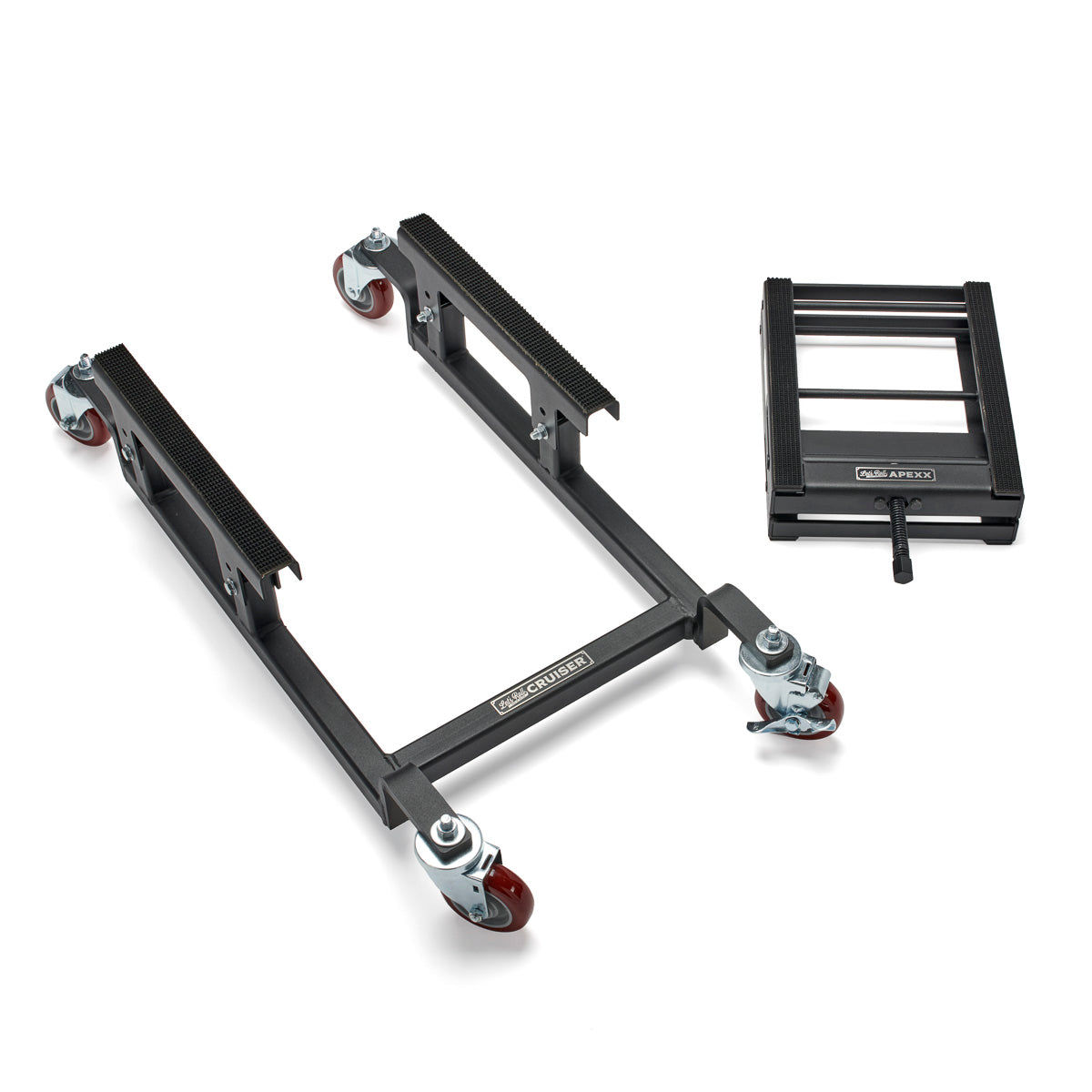
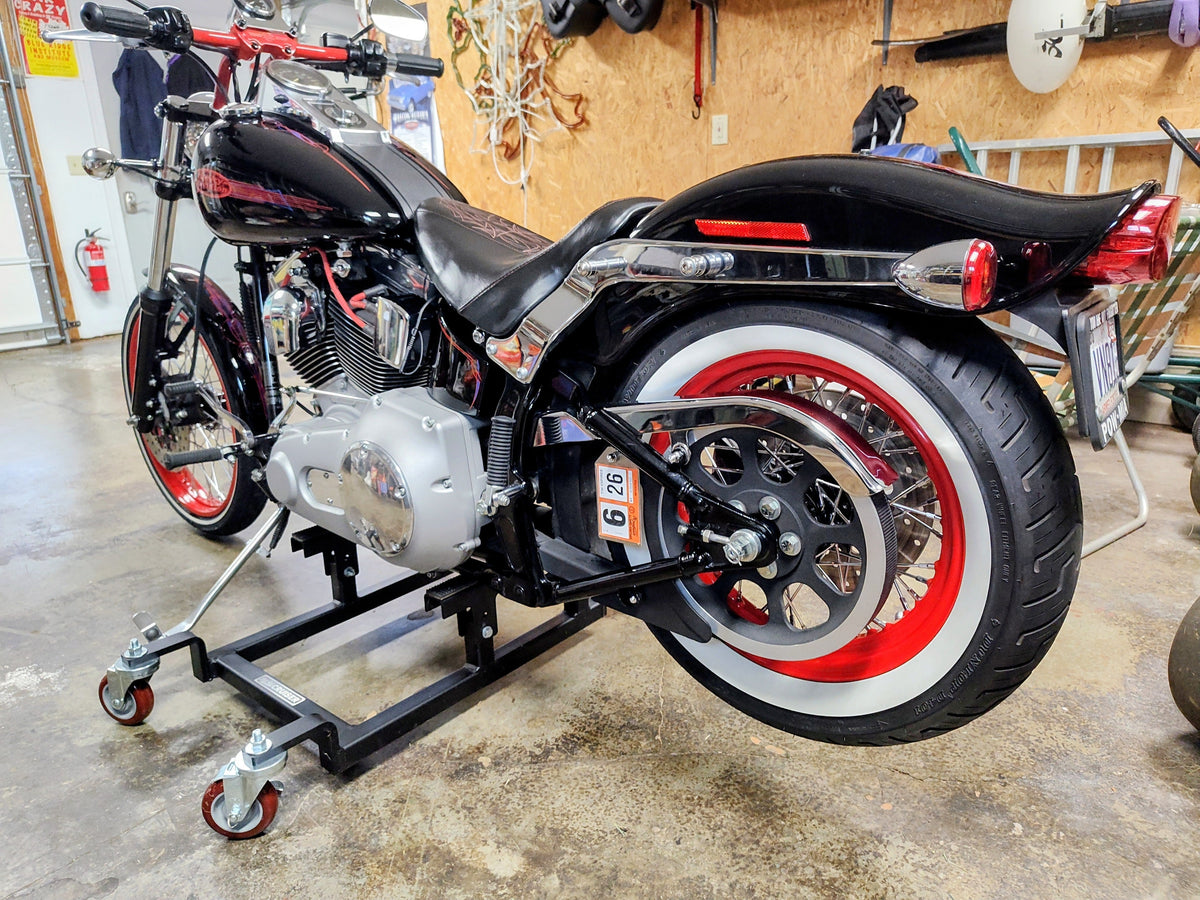
The Let's Roll system solves the stability problem by design. Instead of balancing on its wheels, your bike rests on the dolly through frame contact — the crossbars carry the load right at the frame, so the motorcycle stands fully upright on its own. The lift gets it up onto the dolly; the dolly keeps it planted and lets you roll it anywhere in the garage.
Here's the part that matters for a tire change: once the bike is frame-supported, the wheels are just along for the ride. Pull the front, pull the rear — the bike doesn't care, because it was never relying on them to stay upright. No precarious balancing act, no second set of hands, no held breath.
- 1,100 lb capacity — every full-dress bagger and tourer on the road comes in under it
- Frame-contact support keeps the bike dead upright with a wheel removed
- One-person operation, no tie-downs required
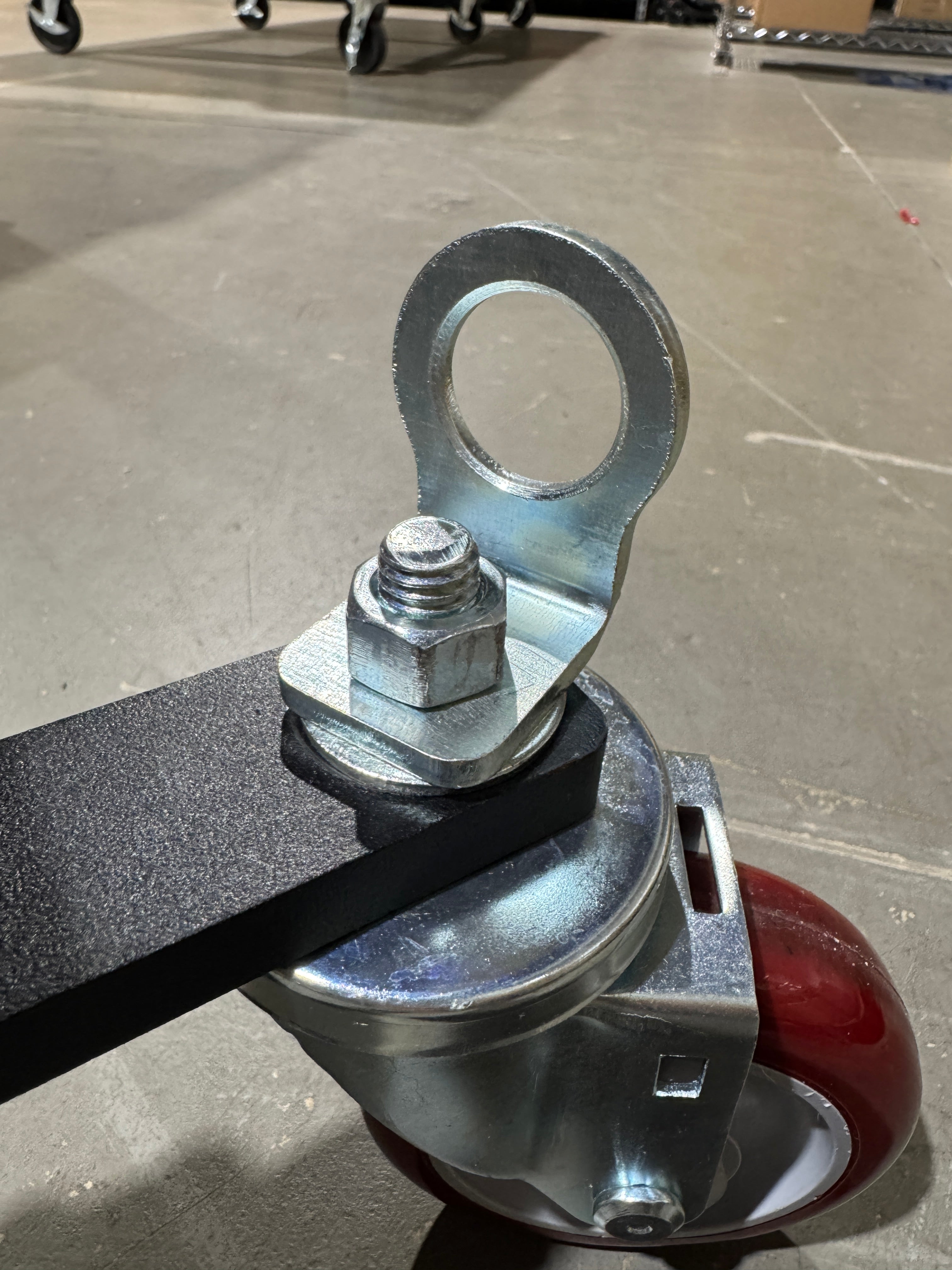
- Zero-scuff ball-bearing casters roll smooth in any direction, then move the bike out of the way when you're done
- Detroit-made from American steel
Wrenching often? If you're in the garage a lot — belt and chain checks, oil, seasonal tire swaps — the Apexx lift uses a replaceable ball-bearing screw built to take heavy, repeated use without wearing out.
Build Your Setup
Buy the dolly on its own, or save $30 with a package.
The Dolly
Cruiser Dolly
Frame-contact crossbars hold the bike fully upright on zero-scuff casters — stable with a wheel off, and rolls anywhere in the garage.
Shop the DollyFor Frequent Riders
Apexx Package
Pairs the dolly with the Apexx lift and its replaceable ball-bearing screw — the setup for riders who are in the garage often.
Shop the Apexx PackageBest Value
Standard Package
The dolly and the lift together — everything you need to lift, hold, and move your bike for a full tire and wheel job.
Shop the Standard PackageChanging your own tires saves money and keeps your bike handling exactly the way you want it. The only thing standing between you and doing it at home is a bike that won't stay put with a wheel off. Solve that, and the rest is just spoons and elbow grease.
Do the Whole Job. In Your Own Garage.
Lift it, hold it steady with a wheel off, and roll it out of the way when you're done — one person, no tip-overs.
Get the Standard Package