Garage Season · Maintenance
End-of-Summer Maintenance: What You Do Now Decides How Spring Goes
The bike doesn't break over the winter. It breaks because of the winter — because of what got skipped on the last warm weekend of the year. Bug guts left on the fairing for five months. Old oil sitting on bearings. A tank of untreated fuel. Two flat spots pressed into a set of tires by 900 pounds of cruiser parked on cold concrete since October.
Here's the full end-of-season list, in the order a rider would actually work through it, and where the Let's Roll Cruiser Dolly takes the fight out of each job. The jack gets the bike up once. The dolly is what your bike lives on for everything after that.
The Short Version
- Do it while it's still warm. A hot engine drains oil properly. A 40° garage in November doesn't.
- Fluids first, then fuel, then power. Oil and filter, brake and clutch fluid, full tank with stabilizer, battery on a tender.
- Get the tires off the ground. The one most riders skip, and the one that costs a set of tires.
- Store it upright on the frame — not leaned on a kickstand for five months with the weight on the suspension.
- Winter is wrench time. Wheels off, brakes done, tires swapped — all easier when the bike is already on a rolling stand.

Timing
Why the Last Warm Weekend Is the Real Deadline
Every fall, the same thing happens. The bike gets ridden into late September, parked "for a couple weeks," and then it's Thanksgiving and nobody wants to pull a drain plug in an unheated garage. So it sits — dirty, with old oil and untreated fuel — until April.
Doing this work now instead of in November comes down to four things:
- Warm oil drains completely. Cold oil clings to the pan and leaves contaminants behind, which is the whole point of changing it before storage.
- Stabilizer needs a running engine. You have to fill the tank, treat it, and run the bike long enough to pull treated fuel through the whole system. Easy in September. Miserable in December.
- Parts still ship fast. Find a cracked belt or a soft brake line now and you have months of slack. Find it in April and you're waiting while everyone else is riding.
- You can still do a shakedown ride. Change the fluids, ride it 20 miles, then check for weeping seals before it sits.
Phase OneWash & Detail
Strip a Summer of Road Off It
Bug acid, road salt from that early-spring ride, brake dust, chain fling. Left in place for five months, every one of those etches into clear coat, chrome, and aluminum. A storage wash isn't a rinse — it's a decontamination.
- Soak and dissolve bugs before touching them with a mitt — that's what our BugSlide line is for.
- Get the underside: swingarm, lower frame rails, inside the fender, behind the exhaust shields.
- Rinse the wheels last and thoroughly. Brake dust is the number one cause of pitted rims over a layup.
Where the dolly earns it
The bike sits upright and dead-level on the crossbars instead of leaning on the kickstand, so you can walk a full circle and reach both sides. Roll it out to the middle of the floor with one hand, wash it, roll it back. And the uprights that hold the crossbars are drilled with drainage holes, so wash water channels out instead of pooling inside the tubing and starting rust from within.
Dry It Completely, Then Seal the Metal
Water trapped in a fastener recess or under a chrome trim edge is what makes rust bloom over winter. Blow it dry — leaf blower, compressed air, whatever moves air — then protect anything bare or bright.
- Wax or sealant on painted panels; a corrosion inhibitor on chrome and raw metal.
- Hit exposed bolt heads, fork lowers, and the exhaust with a light protectant film.
- Do not wax the seat, the grips, the pegs, or the brake rotors.
Where the dolly earns it
Both wheels are in the air, so you can spin each one by hand and polish the entire rim, the whole sidewall, and the back face of the spokes without rolling the bike forward six inches at a time.
Feed the Leather, Clear the Windshield
Saddlebags, seat, and any leather trim dry out and crack in a cold garage. Clean and condition them now. Windshields and fairing screens get a plastic-safe cleaner and a protectant — never glass cleaner with ammonia, which hazes polycarbonate.
Where the dolly earns it
Industrial rubber on the crossbars grips the frame with no tie-downs, so the bike doesn't shift while you're leaning your weight into a saddlebag or scrubbing a windshield. Nothing to knock over.
Phase TwoFluids & Power
Change the Oil and Filter Before It Sits, Not After
This is the most-skipped and most-important item on the list. Used oil carries combustion acids, fuel dilution, moisture, and metal. Leave that in the cases for five months and it works on bearing surfaces the entire time. You're not wasting a change — you're protecting the engine through its longest idle period of the year.
- Ride it to full operating temperature first so the oil carries contaminants out with it.
- New filter every time. Torque the drain plug to spec, new crush washer if your bike uses one.
- Big twins: don't forget the primary and the transmission if they're separate reservoirs.
Where the dolly earns it
On most bikes you can do the whole oil change right on the dolly. The bike sits plumb and upright on its frame instead of listing on the kickstand — the difference between an accurate sight-glass reading and overfilling by a half quart. The crossbars set between 8.5" and 10" in 1.5" increments, so there's clean room under the cases for a drain pan and a socket. And there's no hydraulic ram anywhere in the system to weep oil onto your floor.
Fill the Tank and Stabilize the Fuel
An empty or half-empty tank is an invitation for condensation, and condensation is rust. Fill it, treat it, circulate it.
- Add stabilizer at the dose on the bottle, then fill the tank to the top so there's minimal air space.
- Run the engine five to ten minutes — until it's at operating temperature — so treated fuel reaches the injectors or carb, not just the tank.
- Older carbureted bikes: drain the float bowls after that run, or shut the petcock and run it dry.
Where the dolly earns it
Fill the tank with the bike sitting level rather than leaning and you actually get it full — no trapped air pocket on the high side that shows up as condensation in March.
Brake Fluid, Clutch Fluid, Coolant, Final Drive
Brake and clutch fluid pull moisture out of the air all summer. Dark, murky fluid in the reservoir means it's overdue, and moisture sitting in a caliper over winter is how pistons seize. Most manufacturers call for a two-year interval; the end of the season is the natural time to reset that clock.
- Flush and bleed brake and clutch systems if the fluid is dark or it's been two years.
- Check coolant level and freeze protection on liquid-cooled bikes.
- Inspect the primary and final drive fluid for metal or milkiness.
Where the dolly earns it
Reservoir sight glasses are calibrated for a bike sitting upright. Off the kickstand and level on the dolly, you read them correctly the first time — and you can bleed a rear caliper without a helper holding the bike.
Put the Battery on a Tender
A dead battery in spring is the most common storage failure there is. Cold accelerates self-discharge, and a lead-acid battery that sits flat for months sulfates permanently. A smart tender maintains charge without cooking the plates — leave the battery in the bike and plug it in if you have power where the bike sits.
- Pigtail leads are worth installing. You'll never fight the seat bolts again.
- No outlet nearby? Pull the battery and keep it somewhere dry and temperature-stable, checked monthly.
- Lithium batteries need a lithium-specific charger — don't leave a lead-acid tender on one.
Where the dolly earns it
Four Zero-scuff™ casters mean you park the bike where the outlet is, not where the kickstand happened to land. Two of them have brakes built in — set them and the bike stays exactly there until spring.
One Person · Two Steps · Three Minutes
Jack Gets It Up. The Dolly Does Everything Else.
The jack has one job and it does it in about a minute. The dolly is what your bike lives on — through the wash, through the oil change, through the wheel swap, and through the whole winter.
Slide the low-profile jack under the frame and raise the bike. It rests at 3.85" with the felt and lifts to 10.5".
Roll the Cruiser Dolly underneath while the bike is up. You need 17" of clear frame between the wheels.
Lower the jack. The bike settles onto industrial rubber crossbars — upright, tires up, no tie-downs.
Made in Michigan from USA steel. Shipped from Detroit. Lifetime warranty.
Phase ThreeWheels & Drive
Set Tire Pressure, Then Get the Tires Off the Ground
A tire carrying several hundred pounds in one spot for months develops a flat spot: the rubber deforms and stays deformed. Mild ones ride out after a few warm miles. Bad ones don't, and you buy tires. Cold concrete makes it worse by pulling heat out of the contact patch all winter.
Inflating to the top of the manufacturer's range helps, since pressure drops with temperature. But pressure alone doesn't solve it. Getting the load off the tires does.
- Set pressure cold, at the upper end of spec, before the bike goes into storage.
- Check the DOT date codes while you're down there — rubber ages out even with tread left.
- Look for cracking in the sidewall and between the tread blocks.
Where the dolly earns it
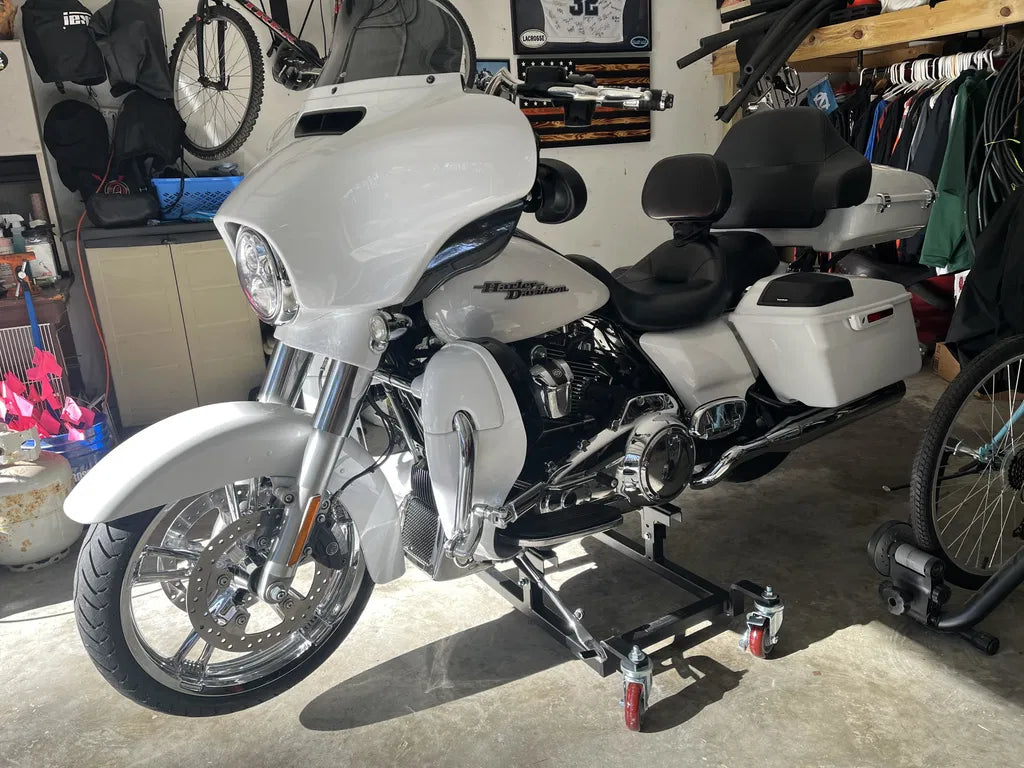
This is the whole reason the Cruiser Dolly exists. The bike rests on its frame, on the crossbars — both tires hang free and the weight comes off the suspension at the same time, so fork seals and shocks aren't compressed for five months either. No flat spots. No cold concrete. No tie-downs cranking the suspension down. Rated at 1,100 lbs, so a fully dressed touring bike is well inside it.
Winter Is When the Wheels Come Off
If you need tires, brake pads, rotors, wheel bearings, or a fork seal, do it in the off-season. Nobody wants their bike apart in June, and shops are quiet in January. Pulling wheels also lets you clean, inspect, and grease everything you never see with the bike together.
- Tires and pads: measure now, order now, install over the winter.
- Spin each wheel bearing by hand and feel for notchiness or play.
- Clean and lube the rear axle before it goes back in.
Where the dolly earns it
Because the load path runs through the frame and not the tires, you can pull a wheel without the bike wanting to tip — the thing that makes wheel-off work nerve-racking on a jack alone. The dolly stays under the bike the entire time, the industrial rubber holds the frame without straps, and the caster brakes keep it from rolling while you lean on it.
Clean and Inspect the Belt or Chain
Belt-drive cruisers: check the entire belt run for cracks, missing teeth, embedded stones, and correct deflection. Chain bikes: clean the chain, inspect for tight spots and rust, lube it, set the slack. A chain going into storage dirty will be a chain coming out of storage seized.
Where the dolly earns it
Rear wheel is already in the air, so you rotate it through a full revolution and inspect every inch of belt or chain in one pass — no rolling the bike back and forth in the garage, and no wrestling a separate rear stand under it.
Phase FourStorage
Block the Pests, Then Cover It
Mice build nests in airbox intakes and exhaust tips, and they chew wiring harnesses. Plug the openings, keep the area clean, and cover the bike with something breathable — a plastic tarp traps moisture against the paint and does more harm than no cover at all.
- Plug the exhaust and intake with something bright and impossible to forget in spring.
- Breathable cover, not plastic sheeting.
- No food, seed, or pet food stored anywhere near the bike.
Where the dolly earns it
With the bike standing straight instead of leaning, a cover drapes evenly and tucks under without hanging up on a kickstand or dragging on the floor.
Park It Where It Belongs for Five Months
Last job: decide where the bike actually lives all winter, and get it there without a fight. For most riders the bike has been eating the middle of the garage all summer. It doesn't have to for the off-season.
Where the dolly earns it
Turn the bike sideways and roll it into a corner or flat against a wall — somewhere a kickstand could never park it — then lock the caster brakes. One person, one hand. The dolly stays under the bike all winter doing its job, and the jack goes flat against the wall on the Motorcycle Dolly Rack until spring. Riders routinely fit a second bike in the space that used to hold one.
Five Months, Two Outcomes
How Your Bike Spends the Winter
On the Kickstand
- Full weight on two contact patches for five months
- Suspension compressed the entire layup
- Leaning, so fluid levels read wrong all season
- Tires sitting on cold concrete
- Parked wherever it fit, eating floor space
- Moving it means a friend, a shove, and a held breath
On the Cruiser Dolly
- Weight through the frame — tires hang free
- Suspension unloaded from October to April
- Dead upright, so every level reads true
- Nothing touching the floor but four casters
- Turned sideways into a corner or against a wall
- Moving it means one hand and a released brake


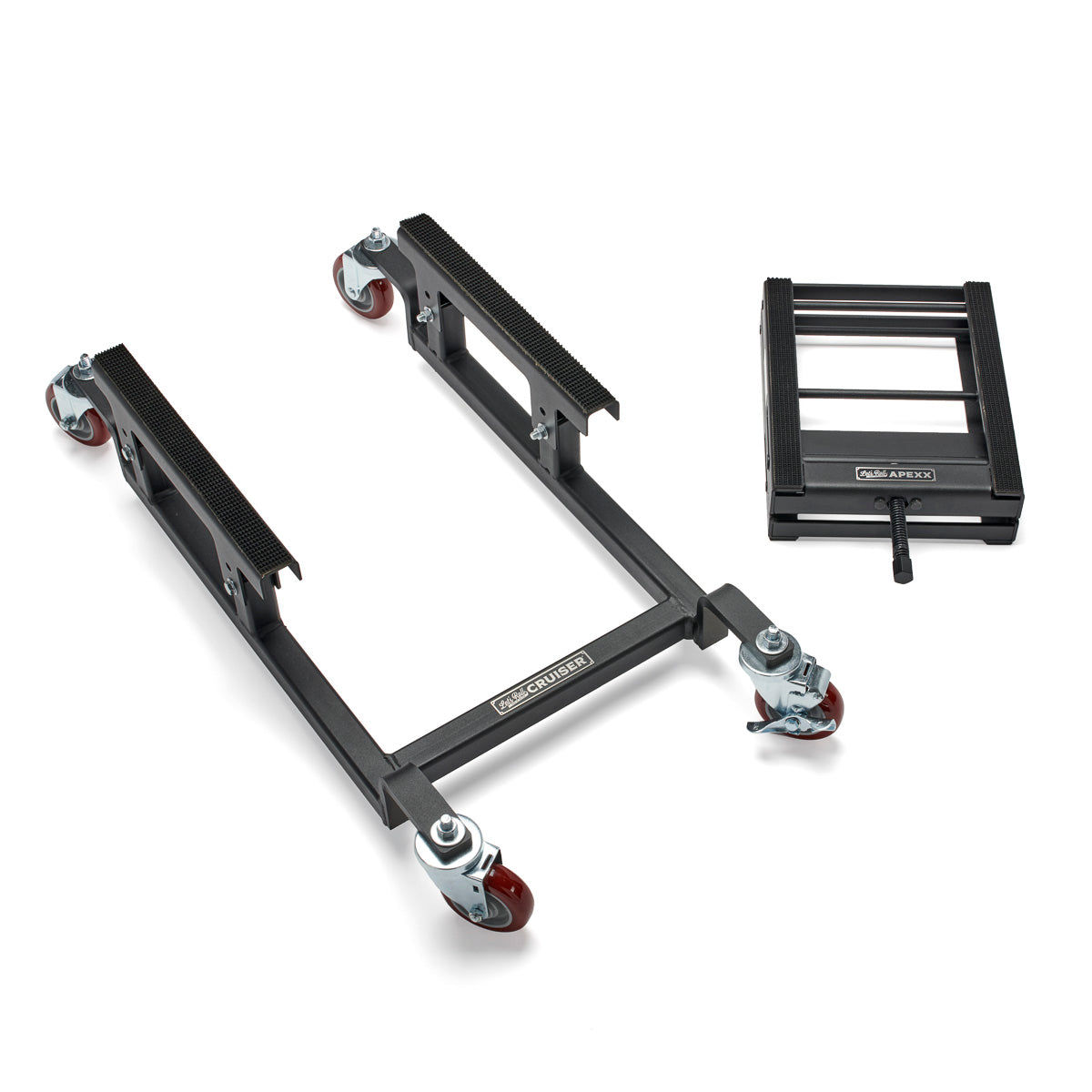
Left: industrial rubber crossbars, adjustable in 1.5" increments. Right: 35" x 18" footprint on US steel.
Skip These
Five Things Riders Do That Make It Worse
✕Starting it once a month to "keep it healthy"
A short idle never gets the engine to operating temperature. All it does is put combustion moisture into cold oil and a cold exhaust, then shut off before any of it burns away. Either ride it long enough to get fully hot, or leave it alone until spring.
✕Draining the tank to "keep the fuel from going bad"
An empty tank breathes humid air all winter and rusts from the inside. Fill it and stabilize it instead.
✕Changing the oil in the spring instead of the fall
Backwards. The point is to get contaminated oil out before the long sit, not after the damage is done.
✕Strapping it down hard to the floor or a trailer anchor
Ratchet straps hold the forks at compression for months. That's rough on seals and springs, and it doesn't get the tires off the ground anyway.
✕Throwing a plastic tarp over it
Non-breathable covers trap condensation against paint and chrome. That's a rust incubator, not protection.
Get Set Up Before the Weather Turns
The Cruiser Dolly
Every job above gets easier when the bike is upright, elevated, and rolling. One dolly, used from the first wash of the season to the last day of the layup.

Let's Roll™ Cruiser Dolly
$415.00
- Capacity1,100 lbs
- Dimensions35" x 18"
- Height8.5" – 10", 1.5" steps
- Weight38 lbs
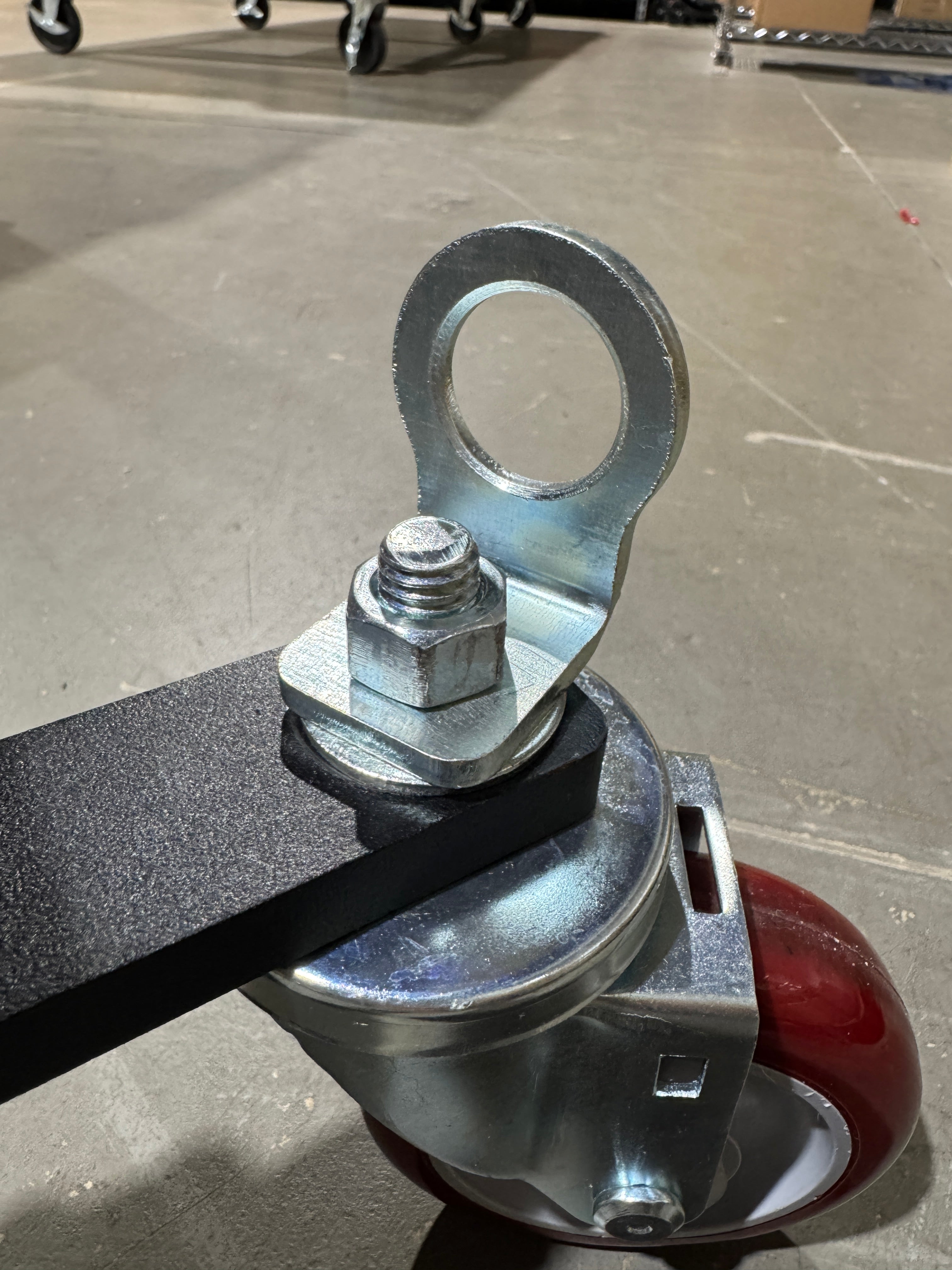
- CastersZero-scuff™ 4", 2 with brakes
- BuiltUS steel, made in Michigan
Needs a jack to get it under the bike. 30-day money-back guarantee.
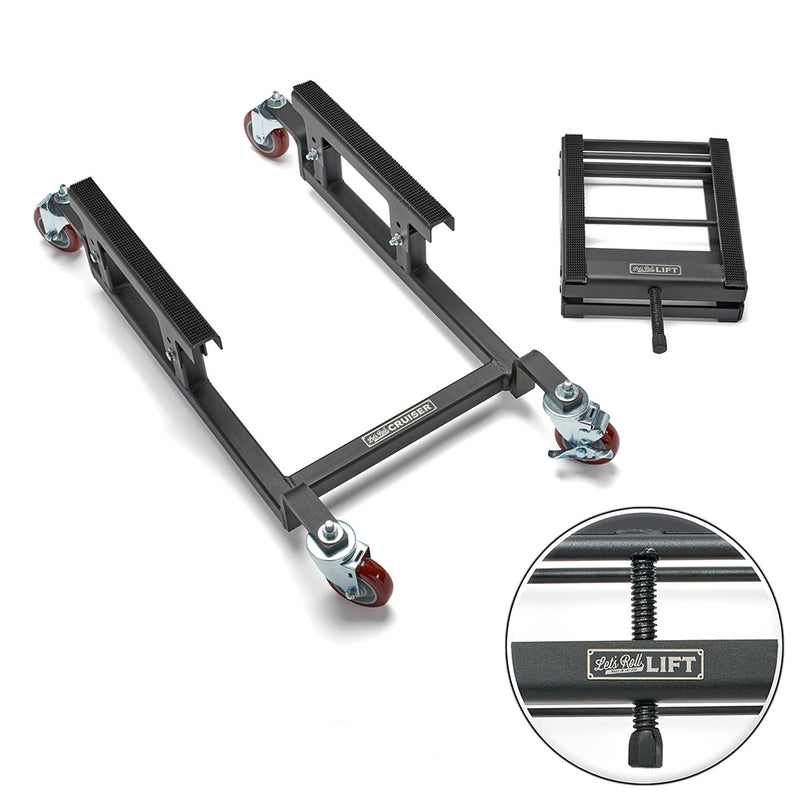
Don't have a jack yet? Both packages pair the Cruiser Dolly with a USA-made scissor jack. Same low profile, same lifetime warranty — the difference is how often you'll be using it.
Standard Package
$714.00
Cruiser Dolly plus the Standard Jack — 1,100 lb capacity, industrial felt base. Everything you need to lift and store a heavy bike, built for occasional use.
View Standard Package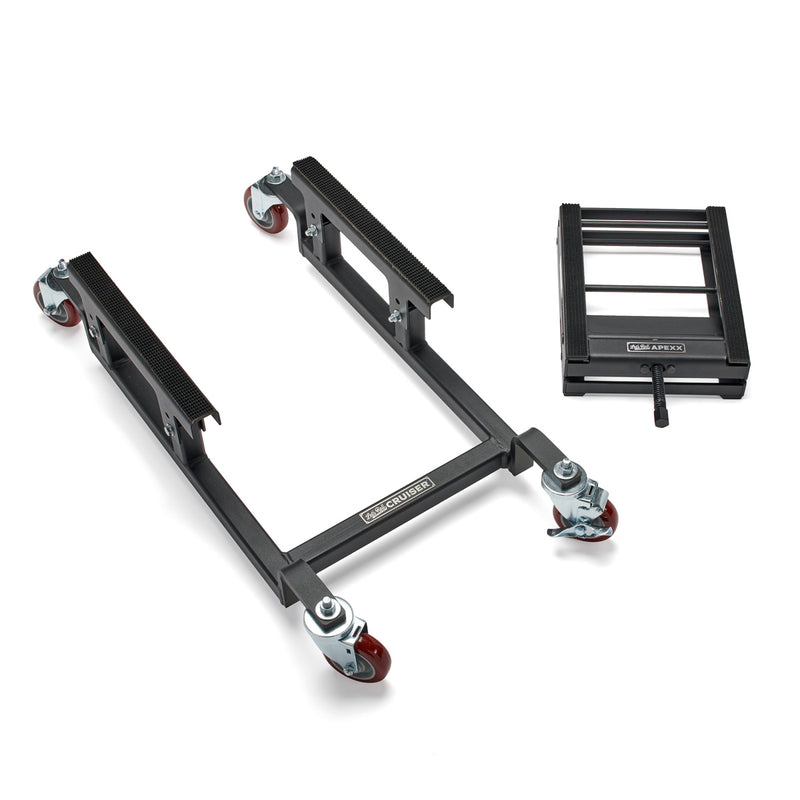
Apexx Package
$834.00
Cruiser Dolly plus the Apexx Jack — same 1,100 lb capacity, with a replaceable ball-bearing screw assembly built for frequent, heavy-duty use.
View Apexx PackageActive military, veterans, and first responders get 5% off year-round — verify here.
Questions
End-of-Season FAQ
Before storage. Used oil holds combustion acids, fuel, moisture, and metal particles, and those sit against bearing surfaces the entire time the bike is parked. Ride it until it's fully warm, then drain it and install a new filter so the engine spends the winter full of clean oil.
If you want to avoid flat spots, yes. A heavy cruiser resting on the same two contact patches for months deforms the rubber, and cold concrete makes it worse. Inflating to the top of the recommended range helps, but the only way to fully eliminate the load is to take the bike's weight off the tires. The Let's Roll Cruiser Dolly does that by supporting the bike on its frame, which also unloads the suspension for the whole layup.
On most bikes, yes. The dolly holds the bike upright and level on its frame with the crossbars set between 8.5" and 10", so there's room underneath for a drain pan and tools, and fluid levels read accurately instead of being thrown off by a kickstand lean. Check clearance under your own cases before you start.
That's one of the main reasons riders buy it. The bike's weight runs through the frame onto the industrial rubber crossbars rather than through the tires, so removing a wheel doesn't change what's holding the bike up. Set the caster brakes first, and work on a level floor.
No. The industrial rubber composition on the crossbars grips the frame, and the design keeps the bike upright without any straps. Two of the four ball-bearing casters have brakes already installed to keep it from rolling.
You need at least 17" of clear frame between the wheels, with no piping, cords, or components blocking direct frame contact, and the kickstand mount should be on the outside of the frame. Measure from the bottom of your frame on the kickstand side to the floor and compare against the jack's 3.85" resting height. It fits most cruiser and touring bikes, but it doesn't accommodate trikes. Indian owners: check whether your model needs the Indian Motorcycle Adapter Plate.
Not unless you can run it to full operating temperature. Brief idling introduces combustion moisture into the oil and exhaust without ever burning it off, which does more harm than leaving the bike alone. A battery tender and stabilized fuel handle what those cold starts were meant to accomplish.
The dolly weighs 38 lbs and stores flat. In riding season, the Motorcycle Dolly Rack hangs the dolly, jack, and adapter plate against the wall so they use zero floor space. Over the winter the dolly stays under the bike and only the jack goes on the rack.
Keep Reading
More From the Garage

Do It Once. Do It Right. Ride in April.
American steel, built in Michigan, shipped from Detroit. Lifetime warranty and a 30-day money-back guarantee.