Spring has a way of arriving faster than riders expect. One week the garage is a storage room, the next week the temps are up and there is no good reason to leave the bike on the stand another day. But after months of sitting, your Indian is not ready to ride just because the calendar says it is.
Whether you ride a ThunderStroke-powered Chieftain, Springfield, or Roadmaster, or a PowerPlus Challenger or Pursuit, the first-ride checklist looks essentially the same — and skipping any part of it puts a machine you have invested serious money in at unnecessary risk.
This guide walks through every step in the order that makes sense, from battery and fluids through tires, brakes, and pre-ride inspection, and closes with a fitment note for Indian owners who use the Let's Roll Apexx Lift and Cruiser Dolly in their garage setup.
"After months of sitting, your Indian is not ready to ride just because the calendar says it is."
1. Battery and Electrical System
Battery failure is the single most common spring startup problem Indian owners report, and it is almost entirely preventable. Indian baggers and tourers carry a parasitic draw — the electronic systems, Ride Command, and security hardware do not fully sleep when the bike is parked. Over a winter of sitting, even a perfectly good AGM battery will deplete if it was not on a smart charger the entire time.
Before you do anything else in the spring, check the battery voltage. A healthy AGM should read between 12.7 and 12.9 volts at rest. Anything under 12.4 volts means the battery needs a full charge before you attempt to start the engine. Attempting to start on a weak battery stresses the starter motor and can damage both the battery and the charging system.
If the battery will not hold a charge after a full conditioning cycle, replace it before the season starts — not after you get stranded. Indian's stock batteries on ThunderStroke and PowerPlus bikes are AGM units. When replacing, confirm the new battery is AGM-compatible and size-appropriate for your model, as cold cranking amps (CCA) matter on these high-compression engines.
While the battery is on your mind, also check:
- Battery terminals for corrosion — clean with a wire brush if needed and apply dielectric grease before reconnecting
- All wiring connections around the battery box for tightness and signs of chafing or rodent damage
- The charging system — once the bike is running, voltage at the battery should read between 13.5 and 14.5 volts at idle, confirming the alternator is charging correctly
2. Fluids
If you changed the oil before putting the bike away for winter, you are starting from a good position. If you did not, spring is the time to do it — do not put fresh miles on old oil. Both the ThunderStroke V-twin and the PowerPlus liquid-cooled engine have their own fluid requirements, and they are not interchangeable.
Engine Oil — ThunderStroke Models (Chieftain, Springfield, Roadmaster)
Indian specifies 20W-40 semi-synthetic oil for ThunderStroke 111 and 116 engines. The service interval is every 5,000 miles or once per season, whichever comes first. Check the dipstick with the bike on level ground, engine cold. Oil should be at or near the full mark and should appear amber-brown, not black or gritty.
Engine Oil and Coolant — PowerPlus Models (Challenger, Pursuit)
The PowerPlus liquid-cooled engine adds coolant to the fluid checklist. Check coolant level in the reservoir — it should sit between the min and max marks. Indian recommends a 50/50 premixed coolant. Do not add straight water. Also check for any discoloration or floating debris in the reservoir, which can indicate seal issues that need attention before the season starts.
Brake Fluid
Check both front and rear brake fluid reservoirs. Per Indian's pre-ride inspection guidance, the fluid should be clear — cloudy or dark brake fluid absorbs moisture over time and should be flushed. Fluid level should be above the minimum indicator in the sight glass. Indian specifies DOT 4 brake fluid for all current models.
Fuel
Indian recommends premium unleaded fuel for all models. If you used a fuel stabilizer during storage, the bike should start without issue. If you did not, and the tank has been sitting with stale fuel, consider draining and refilling with fresh premium before the first start. Fuel degrades in as little as 30 days without stabilizer, and gummed injectors are an expensive spring surprise.
3. Tires
Tires lose pressure over winter. Cold temperatures accelerate this, and a tire sitting under a loaded bike for months develops a flat spot that may take several miles of riding to fully round out — or may never fully recover if the bike sat long enough. Start here before you go anywhere.
Indian's official pre-ride inspection spec for the Challenger and Pursuit calls for 36 psi front, 41 psi rear. ThunderStroke models (Chieftain, Springfield, Roadmaster) have similar targets — always verify against the sticker on your specific bike or in your owner's manual, as pressures vary slightly by model year and trim level.
Beyond pressure, inspect the tires carefully for:
- Flat spots — a section of flattened tread from sitting in one position. Run a hand around the full circumference of each tire
- Cracking or dry rot — sidewall cracking means the tire is past its service life regardless of tread depth. This is a replace-immediately situation
- Tread depth — the minimum legal limit in most states is 2/32 of an inch. Use a depth gauge or the built-in wear indicators in the center tread channel
- Foreign objects — check for screws, nails, or embedded debris that may have been picked up before storage
Note that Indian uses Metzeler Cruisetec tires on many models as OEM fitment. If you are replacing, matching the OEM size and load rating is important — non-recommended tire sizes can compromise ABS and traction control calibration on Challenger and Pursuit models equipped with those systems.
4. Brake Inspection
Brakes that sat all winter have likely developed a thin layer of surface rust on the rotors. This is normal and will typically clear itself within the first few stops of a ride. What you are looking for before you ride is anything more serious than surface rust — deep pitting, warping, or scoring on the rotor face that would indicate a rotor that needs replacement.
Go through each of these on both front and rear:
- Brake pads — visually inspect pad thickness through the caliper. If the pad material is at or near the metal backing plate, replace before riding. The Challenger and Pursuit use Brembo radial calipers that require pad inspection from the front face of the caliper
- Rotors — look for deep scoring, cracks, or warping. Run a finger along the rotor face — grooves that catch your fingernail indicate wear beyond spec
- Brake lines — inspect the full length of both front and rear lines for cracking, kinking, or abrasion marks
- Lever and pedal feel — with the bike upright, pull the front lever and press the rear pedal. Both should feel firm and return cleanly. Spongy feel means air in the line. No return means a stuck caliper
Per Indian's Challenger owner's manual guidance: the front brake fluid should be clear when viewed through the sight glass, the level should be above the minimum mark, and the lever should feel firm throughout the pull. If the level is low and the pads are not worn, check the entire brake system for leaks before riding.
5. Full Pre-Ride Inspection
Indian's official pre-ride inspection covers the items below. Use this as your spring walkthrough checklist — it aligns with what is in your owner's manual and what the factory actually recommends before every ride, though in spring it carries more weight because things change during storage.
|
Tire Pressure and Condition Check pressures against spec, inspect tread depth and sidewalls for cracking or flat spots before the first ride. |
Brake Pads, Rotors, and Lines Inspect pad thickness, rotor surface condition, and the full length of all brake lines. Confirm firm lever and pedal feel. |
|
Suspension Inspect front forks and rear shock for fluid leaks and damage. Check for any debris lodged in the suspension components. |
Drive Belt All Indian baggers and tourers use a belt final drive. Inspect for fraying, cracking, or missing teeth. Check tension — a belt that sat under load all winter may have stretched slightly. |
|
Lights and Electronics Test headlight high and low beam, passing lamp, turn signals, hazard flashers, brake light, and license plate light. Power on Ride Command and verify the system boots normally. |
Saddlebags and Luggage Verify that saddlebags are properly installed and latched. On Roadmaster and Pursuit models, confirm the tour trunk and latching hardware are functioning correctly. |
|
Intake System On Challenger and Pursuit models, check the intake system under the fuel tank for blockage or debris. Clear any obstruction before starting. Do not spray water directly into the intake area. |
Neutral Indicator and Side Stand Place the transmission in neutral and confirm the neutral indicator illuminates. Start the engine and verify the low oil pressure light goes off within a few seconds. Test the side stand operation and confirm the dash indicator works correctly. |
6. The First Start of the Season
Once the physical inspection is complete and you are confident everything checks out, start the engine in the garage before you take the bike anywhere. Let it idle and warm up completely. Watch for:
- The oil pressure warning light — it should go out within a few seconds of startup. If it stays on, shut off the engine immediately and check oil level and pressure
- Any check engine lights or fault codes on the Ride Command display — address any stored codes before riding
- Exhaust smoke — a small amount of white smoke at first startup is normal condensation burning off. Blue or grey smoke indicates oil burning and warrants further inspection
- Unusual noises — ticking that fades as oil pressure builds is normal. Knocking, rattling, or squealing that persists once the engine is warm is not
Take the first few miles easy. Brakes may feel slightly less responsive until the thin layer of rotor oxidation clears. Tires need a mile or two to come up to operating temperature and develop proper grip. Ride conservatively, check that everything feels right, and then settle into the season.
Garage Tool
Make the Spring Inspection Easier
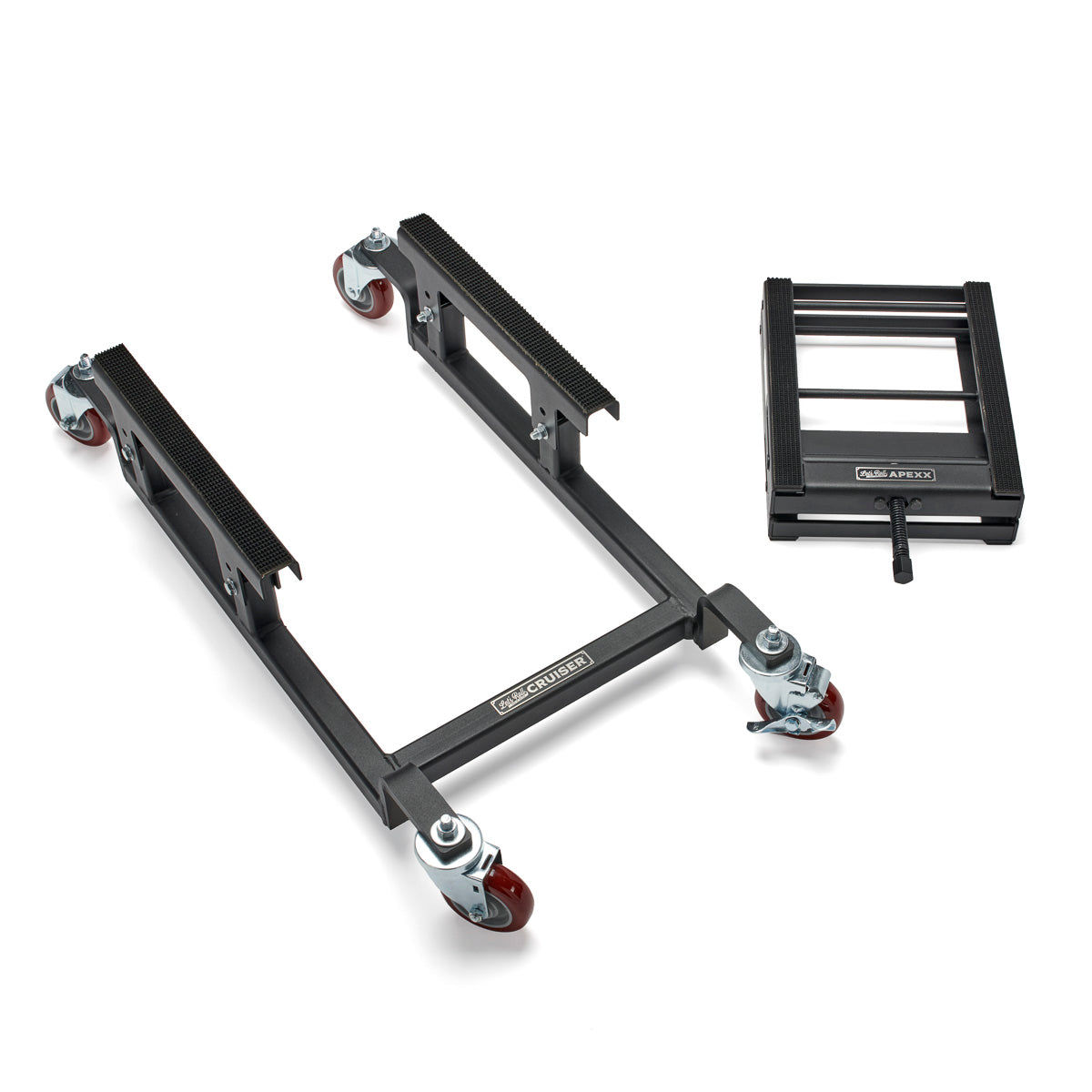
Going through this checklist is significantly easier when the bike is elevated. Inspecting tire sidewalls, checking brake pad thickness, examining the drive belt, and looking under the frame for fluid leaks all become faster and more thorough when you are not crouching on a garage floor.
The Let's Roll™ Apexx Lift raises your Indian off the ground to a comfortable working height — no hydraulic jack required, no guesswork on lift points. Paired with the Cruiser Dolly, you can position the bike anywhere in the garage and hold it there while you work through every item on this checklist.
Shop the Apexx Lift — $449 Shop the Cruiser Dolly — $4157. Fitment Note: IMAP vs. No IMAP
If you use the Let's Roll Lift and Cruiser Dolly with your Indian, here is what you need to know about fitment going into the season.
ThunderStroke-powered models require the IMAP. The Indian Motorcycle Adapter Plate (IMAP) is the bridge between the Let's Roll system and the frame geometry of ThunderStroke bikes. The ThunderStroke 111 and 116 engines, found in the Chieftain, Springfield, and Roadmaster, have fluid lines and hardware underneath that a standard lift platform would contact directly. The IMAP creates proper clearance and provides stable, rubber-padded lift points that do not damage the frame or undercarriage.
|
Requires the IMAP Indian Chieftain (Dark Horse, Limited, Elite) Indian Springfield (Dark Horse) Indian Roadmaster (Dark Horse, Limited, Elite) Indian Vintage (Dark Horse, Vintage) All 2014–2024 ThunderStroke models listed above |
No IMAP Needed Indian Challenger (all trims) — PowerPlus frame geometry works directly with the Let's Roll system. See the Pursuit/Challenger guide for setup instructions. Indian Pursuit (all trims) — Same PowerPlus platform. No adapter required. |
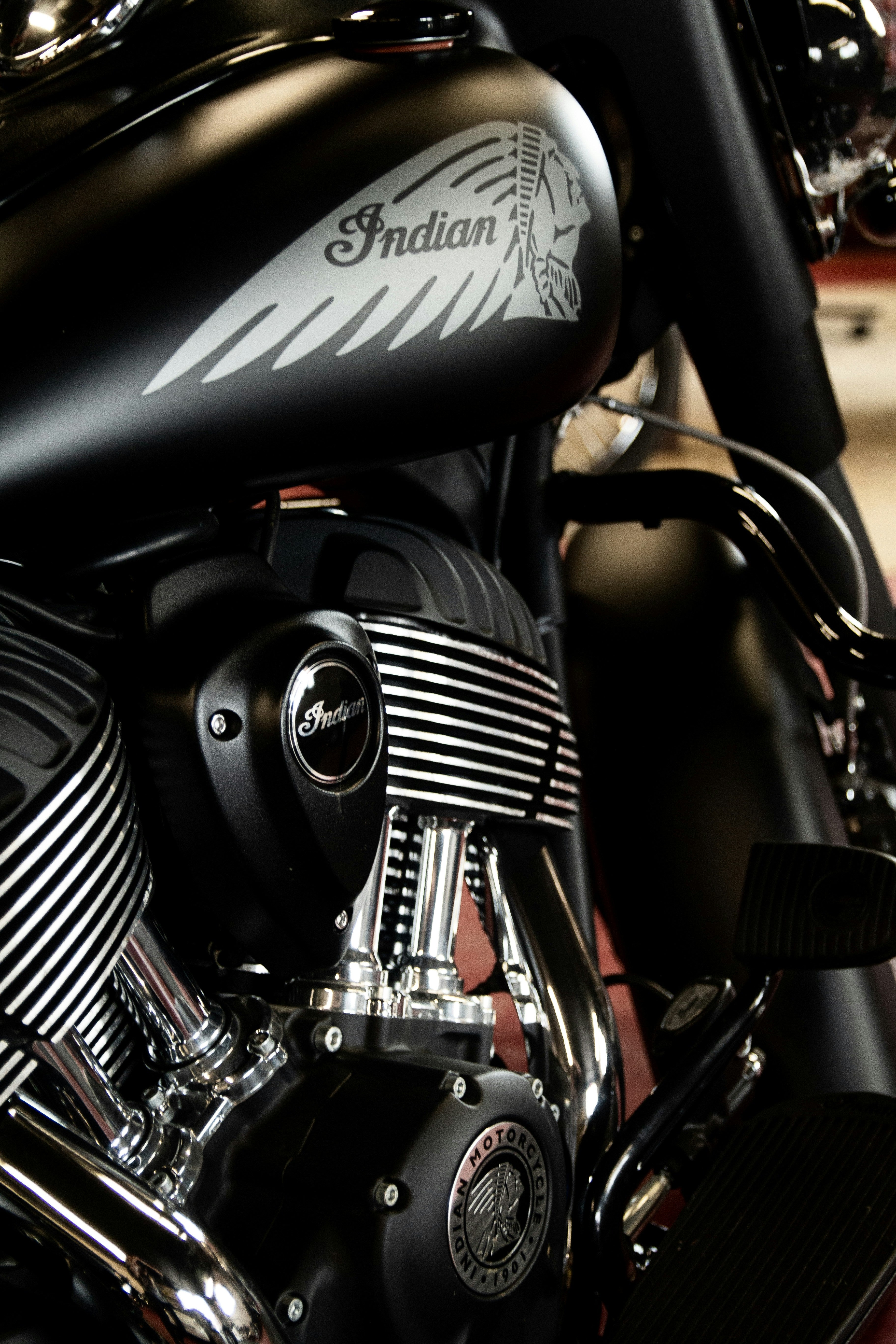
If you are unsure which setup applies to your model, the quickest way to confirm is to check the engine. ThunderStroke = air-cooled, visible cylinder fins, traditional V-twin look. PowerPlus = liquid-cooled, more enclosed engine appearance, radiator visible on the Challenger and Pursuit.
One note on the Chief models: the newer Chief platform (2021 and beyond) has a wider frame that does not engage with the IMAP. These models are not compatible with the Let's Roll system via the IMAP. If you ride a Chief and have questions, reach out to the Let's Roll team directly at letsroll.store/pages/contact.
For ThunderStroke Owners
Indian Motorcycle Adapter Plate (IMAP)
The Let's Roll IMAP is the purpose-built adapter that connects ThunderStroke-powered Indian motorcycles to the Let's Roll Lift and Cruiser Dolly system. Made in the USA, with rubber-padded contact points that protect your frame and create a stable, secure lift platform.
- → Confirmed fitment on Chieftain, Springfield, Roadmaster, and Vintage (2014–2024)
- → Provides clearance over fluid lines and undercarriage hardware on ThunderStroke bikes
- → Zero-scuff rubber padding protects your frame finish
- → Works with both the Apexx Lift and the Standard Lift
Go into the Season Ready
The bikes that have problems in spring are almost always the ones that went into storage without a proper inspection and came out without one either. Indian riders put real money into these machines — Chieftains, Springfields, Roadmasters, Challengers, and Pursuits are serious, capable motorcycles that reward the riders who take care of them.
The spring checklist is not complicated. Battery, fluids, tires, brakes, pre-ride walkthrough, first start. Two hours in the garage now saves a lot of frustration on the road later. And if working through that checklist is easier with the bike elevated and positioned exactly where you need it, that is exactly what the Let's Roll system is designed to do.
The season is short. Make sure your Indian is ready for every mile of it.
Your Indian. Your Garage. Done Right.
The Let's Roll Apexx Lift, Cruiser Dolly, and IMAP give Indian bagger and touring owners everything they need to work on, move, store, and maintain their bikes properly. Made in Detroit. Built for this.
Apexx Lift — $449 Cruiser Dolly — $415 IMAP Adapter — $99Made in Detroit. Loved in garages across America.