GARAGE EQUIPMENT 101
Dolly vs. Lift: What's the Difference — and Which One Do You Actually Need?
They get lumped together constantly, but a lift and a dolly do two completely different jobs. Mixing them up is how riders end up with the wrong tool — or a bike on the ground.
THE SHORT ANSWER
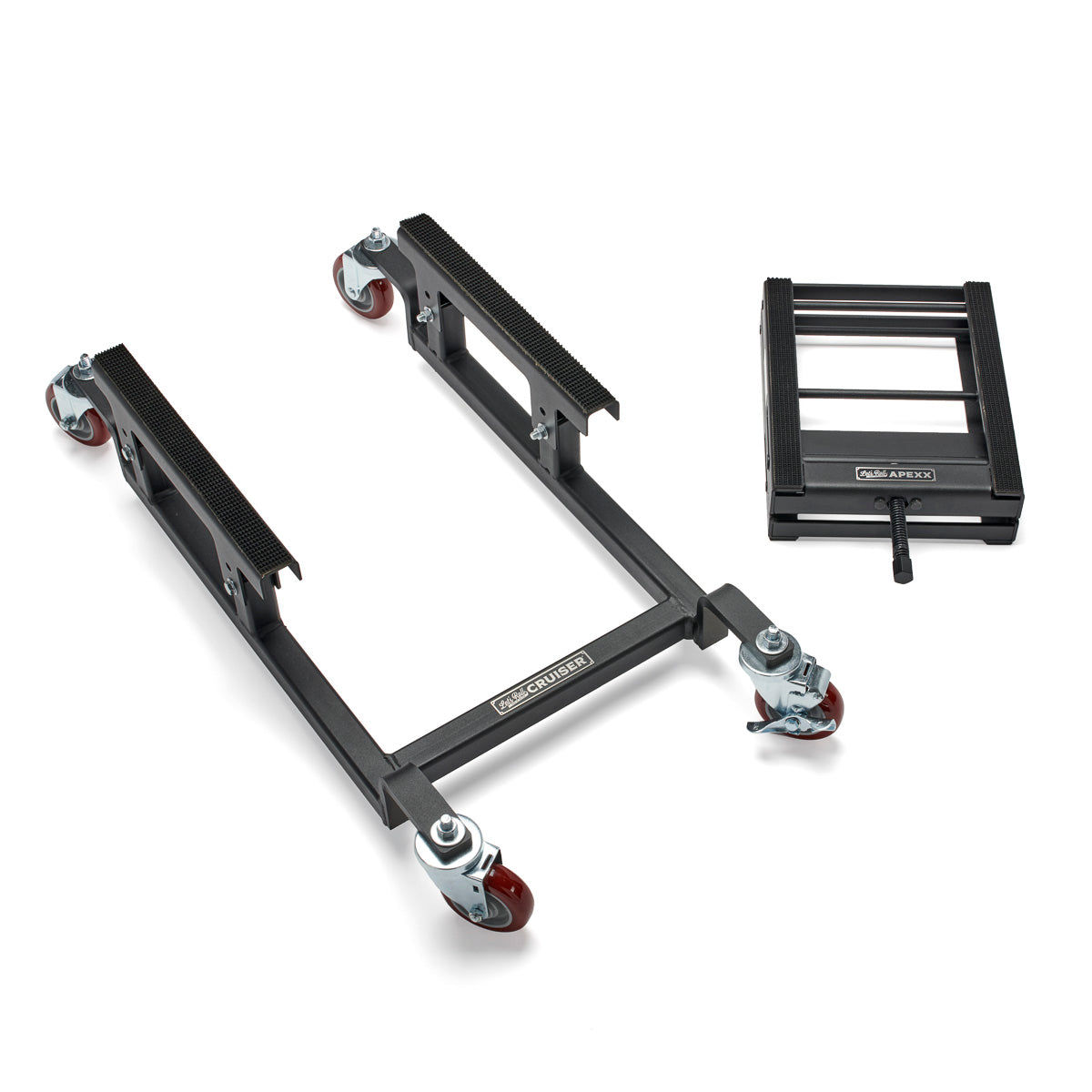
A lift has one job: safely raising your motorcycle just high enough to slide the dolly underneath. That's it. It's not built to hold your bike up for an oil change or a detail session. A dolly is what actually stores and moves your bike — day to day, indefinitely, with the tires off the ground and the weight off the suspension. Most riders need both, working together, which is exactly why they're sold as a package.
Why This Gets Confused So Often
Search "motorcycle lift" and "motorcycle dolly" and you'll see them used almost interchangeably — in forum threads, in product listings, even in casual conversation at the dealership. That's because both tools show up in the same sentence: "get the bike up off the ground." But that phrase is doing a lot of hiding.
A lift gets the bike up. A dolly is what it sits on once it's there. One is a brief, one-time action. The other is where your motorcycle actually lives between rides. Treat them as interchangeable and you'll either buy a tool that can't do what you need, or leave your bike resting on a lift or a jack for weeks at a time — which is exactly what neither of those tools is designed for.
What Each Tool Actually Does
Here's the plain-language breakdown — what each one is built for, and just as important, what it isn't.
Get the bike just high enough to load the dolly
- Raises the motorcycle high enough to get the dolly underneath it
- Meant for a short lift-and-lower action, not extended time under load
- Not designed as a maintenance platform for oil changes, tire work, or detailing while elevated
- Felt padding on the base protects your garage floor while the lift is in use
- Once the bike is transferred to the dolly, the lift's job is finished
Store and move the bike — indefinitely
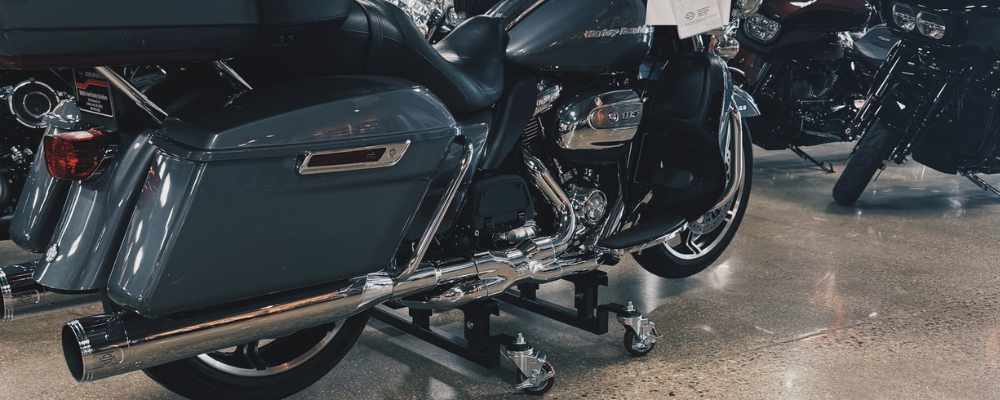
- Holds the bike upright on its frame, tires off the ground, weight off the suspension
- Rolls smoothly in tight garage spaces — forward, backward, sideways
- No tie-downs needed once the bike is seated in the crossbars
- This is where the bike sits between rides, through winter storage, or while you work around it
Why a jack isn't a substitute for either one
- A jack (or a paddock stand) balances your bike on a narrow point or a small footprint
- That narrow base is exactly what makes it prone to tipping or wobbling under a heavy bike's weight
- Fine for a quick, supervised task — risky as a place to leave a bike unattended
- It solves neither problem well: not stable enough to work on, not built for long-term storage
It Comes Down to the Base of Support
A heavy touring or cruiser motorcycle is top-heavy and unforgiving the moment it's off its own wheels. What keeps it upright isn't the tool's strength — it's how wide a footprint that tool gives the bike to balance on.
Jack / Single Point
Balances on one narrow contact point. Minimal side-to-side resistance.
Tips easily
Lift, Mid-Raise
Wider base than a jack, built for a brief lift-and-lower — not extended standing time.
Stable briefly
Dolly, Full Width
Full-width four-point base with locking casters. Built to hold the bike indefinitely.
Stays put
Side-by-Side Comparison
| What you need | Jack / Paddock Stand | Lift Alone | Dolly Alone | Lift + Dolly Package |
|---|---|---|---|---|
| Getting the bike up safely | Narrow, tip-prone | Built for it | Needs a lift first | Built for it |
| Long-term storage | Not intended | Not intended | Works well for this | Works well for this |
| Rolling the bike around the garage | No | No | Smooth, tight-space maneuvering | Smooth, tight-space maneuvering |
| Stability under a heavy touring bike | Prone to wobble | Stable while raising | Full-width base | Full-width base |
| Floor protection | Varies, often none | Felt-padded base | Zero-scuff™ wheels | Zero-scuff™ wheels + felt-padded lift base |
| Tie-downs required | Often yes | N/A | None needed | None needed |
The Two-Step System: How They Actually Work Together
Once you see the lift and dolly as two steps in one process instead of two competing products, the whole thing clicks.
Slide the lift into place and raise the bike
The lift does the one job it's built for — raising the motorcycle just far enough to clear the dolly's crossbars. One person, no straining, no second set of hands required.
Wheel the dolly underneath
With the bike briefly elevated, the dolly slides into position beneath the frame.
Lower the bike onto the dolly — the lift's job is done
The industrial rubber crossbars grip the frame. The bike is upright, resting on its frame — not its kickstand, not its suspension. No tie-downs.
The dolly takes it from here
Roll it into a corner, spin it for detailing, tuck it away for winter — all on locking Zero-scuff™ casters that won't mark your floor. The lift can be put away until you need to reverse the process.
Why Most Riders Buy Both, Together
Since the lift and dolly are two steps of one job, buying them separately rarely makes sense — you need the lift to get the bike onto the dolly in the first place, and the dolly is where the bike actually lives. That's why both Let's Roll packages bundle them at a lower price than buying each piece alone.

- Standard Lift (1,100 lb capacity) + Cruiser Dolly
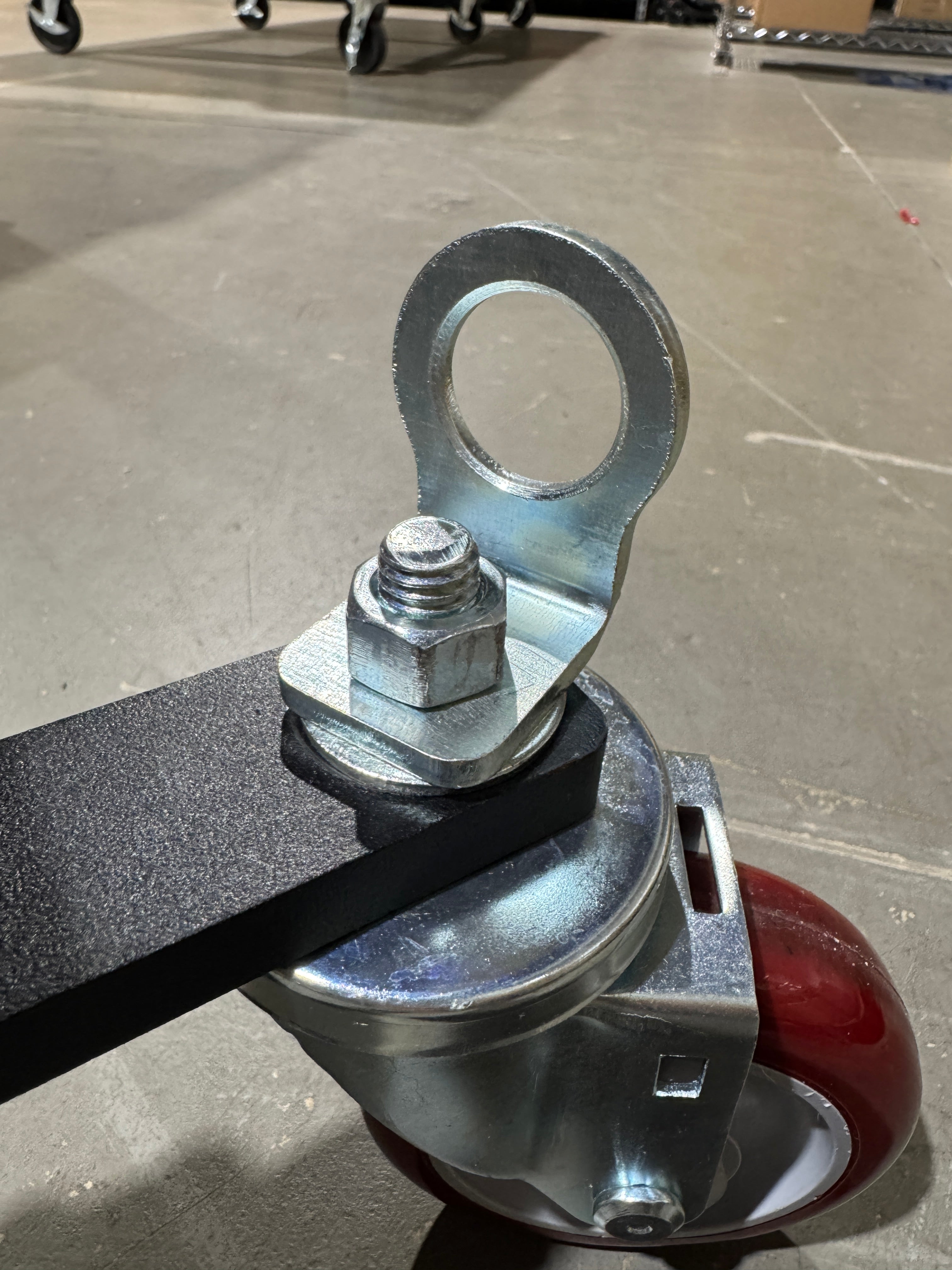
- Zero-scuff™ wheels with two built-in brakes
- Industrial rubber crossbars — no tie-downs needed
- Felt-padded lift base protects your garage floor
- Lifetime warranty, 30-day money-back guarantee

- Apexx Lift (1,100 lb capacity) + Cruiser Dolly
- Replaceable ball-bearing screw — built for riders who lift and lower often
- Zero-scuff™ wheels with two built-in brakes
- Felt-padded lift base protects your garage floor
- Lifetime warranty, 30-day money-back guarantee
"I always assumed a jack alone would be enough. First time I saw how easily it could've tipped with my Ultra Limited on it, I ordered the full package the same day."
"Didn't realize the lift and dolly were two different tools until I actually used them together. Now it's obvious — you need both."
"The dolly is where my bike lives all winter. The lift only comes out for the thirty seconds it takes to get it there."
Common Questions
You can, but you'd have nowhere to lower the bike onto once it's raised. The lift isn't meant to hold your bike for storage or for maintenance work — it's built for a brief, controlled raise. Almost every rider who buys a lift alone ends up back for the dolly within a few months.
For a quick, supervised task, a jack can work. The issue is the narrow base of support — it's balancing your bike's full weight on a small footprint, which is exactly what makes it prone to tipping or wobbling, especially with a heavy touring or cruiser bike. It's not a stability problem you want to discover mid-task.
No — once your bike is on the dolly, the dolly is what you use day to day. The lift only comes back out when you need to take the bike off the dolly and back onto its own wheels.
Both handle 1,100 lbs. The Apexx Lift has a replaceable ball-bearing screw, built for riders who lift and lower frequently and want that wear part to be swappable over the life of the lift.
No — the Cruiser Dolly uses Zero-scuff™ urethane wheels specifically so it won't mark epoxy or concrete floors, and two of the casters have built-in brakes to keep it from rolling once it's positioned.
Stop Choosing Between Stability and Convenience
Get the lift that gets your bike up safely, and the dolly that keeps it there — for storage, for maintenance, for good.
Shop the Apexx Package — $834