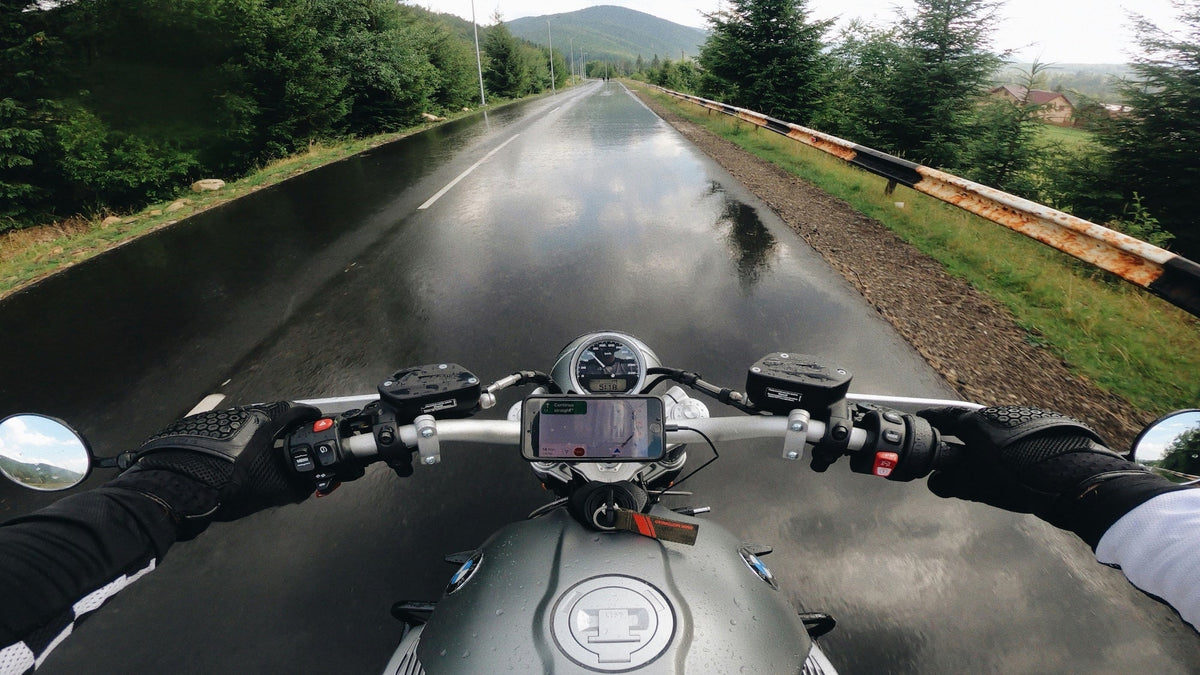
Rain doesn’t have to ruin a ride.
But for a lot of riders, it does.
Grip feels vague. Vision degrades. Confidence drops. Hands tighten on the bars. Corners feel sharper than they should. Every mile feels longer than expected.
That white-knuckle feeling doesn’t come from rain itself. It comes from uncertainty — about traction, braking, and how the bike will respond when conditions change.
Riders who handle rain well aren’t braver. They’re calmer. And that calm comes from preparation, realistic expectations, and understanding what actually matters in the wet.
This is what works.
Reset the Mindset Before the Ride
Rain riding is not about pretending conditions are normal. They’re not.
But rain also isn’t an emergency. It’s a reduction in grip and visibility, not a loss of control.
The goal is not to ride the same way you do in the dry.
The goal is to ride smoothly, predictably, and patiently.
Most rain-related stress comes from trying to force dry-weather habits onto wet pavement.
Tires Matter More Than Anything Else in the Rain
If rain riding feels sketchy, tires are usually the reason.
Wet pavement exposes every weakness in your tire setup. Worn tread, uneven wear, low pressure, or debris you didn’t notice in dry conditions suddenly show up as vague feedback and reduced confidence.
Why Tire Checks Matter More Before a Rain Ride
In the rain, tires are doing more work with less margin. Small issues that feel manageable in dry conditions become stress multipliers in the wet.
Before riding in the rain, you want to be confident about:
-
Tread depth across the entire tire
-
Even wear, not just what’s visible at first glance
-
Proper pressure, especially with cooler temperatures
-
No embedded debris that could compromise grip
The problem is that most riders only see one section of the tire when the bike is parked.
How Using a Dolly Changes Tire Inspection
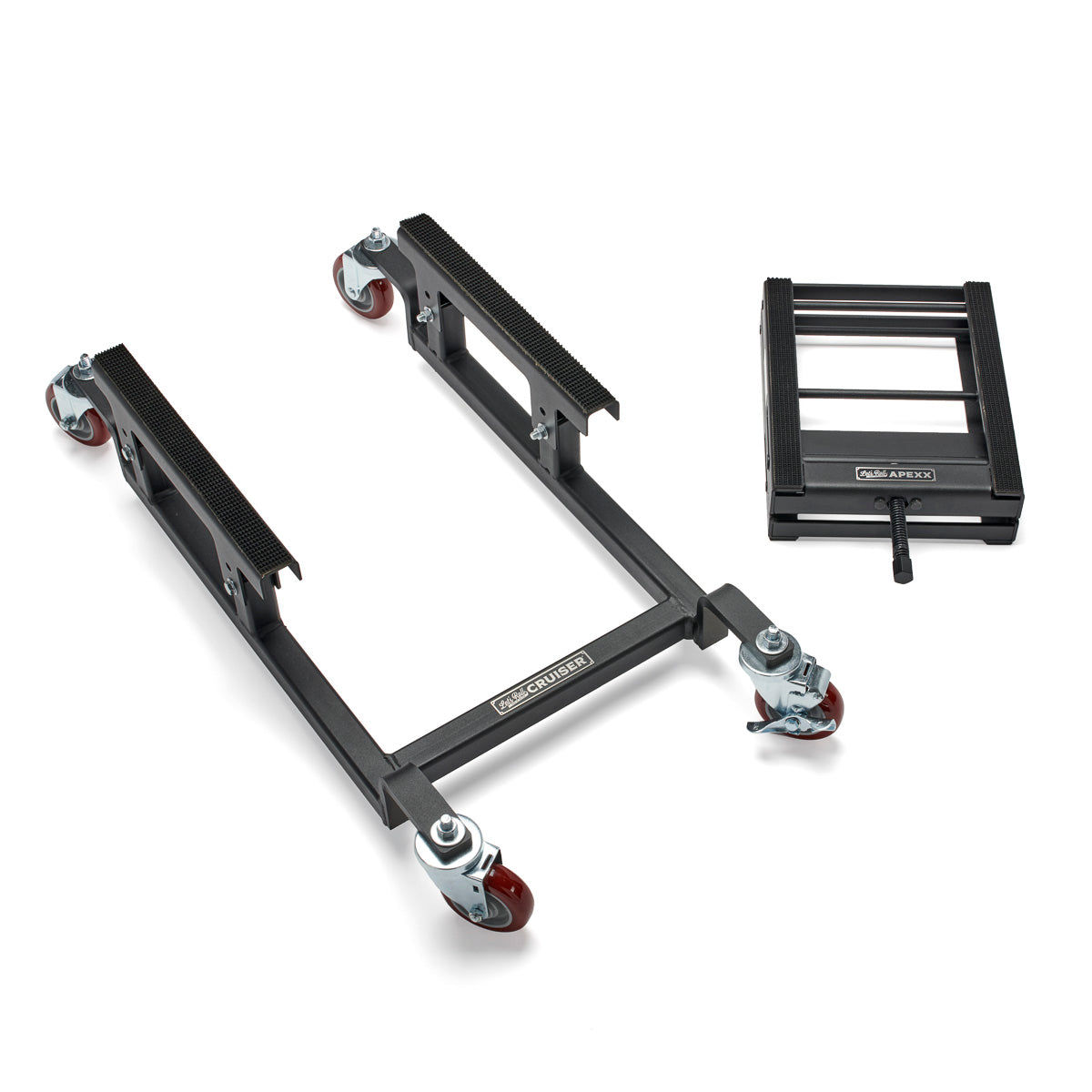
Being able to roll the bike smoothly on a dolly makes tire inspection far more accurate.
Instead of checking the same visible patch of rubber and guessing about the rest, you can rotate the wheels and inspect the full circumference of each tire. Flat spots from storage, uneven wear, or small cuts are much easier to catch when the tire can be turned freely instead of being dragged, leaned, or ignored.
It also makes pressure checks easier. When the bike is stable and easy to reposition, riders are far more likely to take the extra minute to check both tires properly instead of rushing through it because the process feels awkward.
Confidence in Tires Reduces Stress Everywhere Else
White-knuckle rain riding often isn’t about technique — it’s about doubt.
When riders aren’t sure about their tires, every corner feels sharper and every brake input feels risky. When they know the tires are in good shape, the bike feels predictable even with reduced traction.
That confidence starts before the ride ever begins.

Gear That Actually Helps in the Rain
Waterproof Gloves With Real Feel
Wet hands get cold fast. Cold hands lose dexterity.
Rain gloves should be:
-
Truly waterproof
-
Flexible enough to preserve control feel
-
Grippy when wet
Bulky gloves that kill feedback make riders tense up. Reduced feel leads to abrupt inputs — and abrupt inputs are what break traction in the rain.
Jackets That Manage Water, Not Just Block It
Staying dry is about more than comfort. It’s about staying relaxed.
Effective rain jackets:
-
Seal properly at the collar and cuffs
-
Don’t balloon at speed
-
Manage internal moisture so you don’t soak yourself from the inside
A soaked rider tightens up. That tension goes straight into the bars.
Vision Is Non-Negotiable
Rain reduces contrast and depth perception.
Before riding in the rain:
-
Clean the visor inside and out
-
Confirm anti-fog works in cooler temps
-
Make sure water sheds instead of smearing
If you can’t see clearly, everything else feels harder than it needs to be.

Technique Changes That Reduce Stress Immediately
Slow Down Earlier Than You Think
Rain riding punishes late decisions.
Brake earlier. Roll off sooner. Set speed before the corner, not in it.
This keeps the bike settled and prevents panic inputs when traction is already limited.
Smooth Inputs Are Mandatory
In the rain:
-
Throttle should be rolled on gradually
-
Brakes applied progressively
-
Steering inputs made calmly
Smoothness is not optional. It’s how traction is preserved.
Avoid Painted Surfaces and Metal
Painted lines, crosswalks, manhole covers, and steel plates are dramatically slick when wet.
Adjust your line to minimize time spent on them, especially mid-corner or under braking.
This isn’t fear — it’s awareness.
Increase Following Distance
Rain shortens sight lines and lengthens stopping distances.
More space gives you:
-
Time to react
-
Room to brake smoothly
-
A calmer mental state
Stress drops when you’re not boxed in.
Why Preparation Matters More in the Rain
Rain magnifies small problems.
Low tire pressure. Sticky controls. Vague brakes. Poor visibility. These issues may feel tolerable in dry conditions and become confidence killers in the wet.
When the bike is easy to inspect and reposition before the ride, riders are far more likely to:
-
Check tires thoroughly
-
Confirm brake feel
-
Adjust controls
-
Start the ride calm instead of rushed
That calm carries onto the road.
Braking in the Rain Without Panic
Braking is where most riders tense up.
The solution is separating pressure from urgency.
Apply brakes earlier, but not harder. Load the tire gradually. Use both brakes smoothly. Avoid sudden grabs.
Modern tires and braking systems perform well in the rain — when given time.
Cornering With Confidence in the Wet
You don’t need to avoid lean entirely.
You do need:
-
Reduced entry speed
-
Stable throttle through the corner
-
Smooth exits
Choose lines that avoid standing water and debris. Let the bike do the work.
Confidence comes from predictability, not aggression.
When Rain Becomes Heavy
There’s a difference between riding in rain and riding in a downpour.
If visibility drops or standing water increases:
-
Reduce speed further
-
Increase following distance
-
Consider stopping and waiting it out
Smart riders know when patience beats progress.
Post-Ride Matters Too
Rain riding doesn’t end when the engine shuts off.
After the ride:
-
Inspect tires for debris
-
Check brake feel once dry
-
Dry gear properly
When post-ride care is easy, rain stops feeling like a hassle and starts feeling manageable.
The Bottom Line
Rain riding isn’t about being fearless. It’s about being prepared.
The right tires, checked thoroughly. Gear that keeps you dry and relaxed. Techniques that respect reduced traction. And a setup that makes preparation calm instead of rushed.
White-knuckle stress comes from uncertainty.
Confidence comes from knowing the bike is ready.
When preparation is easy and tires are trustworthy, rain becomes another condition — not something that controls the ride.