
Changing your motorcycle oil is one of the most important maintenance tasks you can do.
It protects your engine.
It improves performance.
It extends the life of your bike.
It saves money over dealer service.
And yet many riders delay it.
Not because it’s complicated.
Because it’s inconvenient.
Awkward positioning. Tight garage space. Wrestling a heavy bike into place. Struggling to get the drain pan aligned.
The oil change itself is simple. The setup is usually what makes it frustrating.
Here’s how to change your motorcycle oil correctly — and why using a motorcycle dolly makes the entire process cleaner, safer, and easier.
Why Regular Motorcycle Oil Changes Matter
Motorcycle engines run hotter and at higher RPMs than most cars. Oil breaks down faster under those conditions.
Skipping oil changes can lead to:
-
Increased engine wear
-
Rough shifting
-
Heat buildup
-
Sludge accumulation
-
Long-term internal damage
Most manufacturers recommend changing your motorcycle oil every 3,000–5,000 miles, or according to your owner’s manual.
If you’re storing your motorcycle for winter, changing the oil before storage is even more important.
Tools You’ll Need To Change Motorcycle Oil
Before you begin, gather:
-
Correct motorcycle oil (per manufacturer spec)
-
New oil filter
-
Socket wrench
-
Drain pan
-
Funnel
-
Shop rags
-
Torque wrench (recommended)
And one thing most riders overlook:
Space to work properly.
Oil changes are dramatically easier when the motorcycle is positioned correctly and stable.

Step 1: Warm The Engine
Start the motorcycle and let it run for three to five minutes.
Warm oil drains more completely and flows more easily. You don’t want it hot — just warm enough to thin.
Shut the bike off and let it settle briefly.
Step 2: Position The Motorcycle Correctly
This is where most home oil changes become frustrating.
If your motorcycle is:
-
Wedged between a car and a wall
-
Angled awkwardly
-
Too close to shelving
-
Difficult to roll forward or backward
You immediately make the job harder than it needs to be.
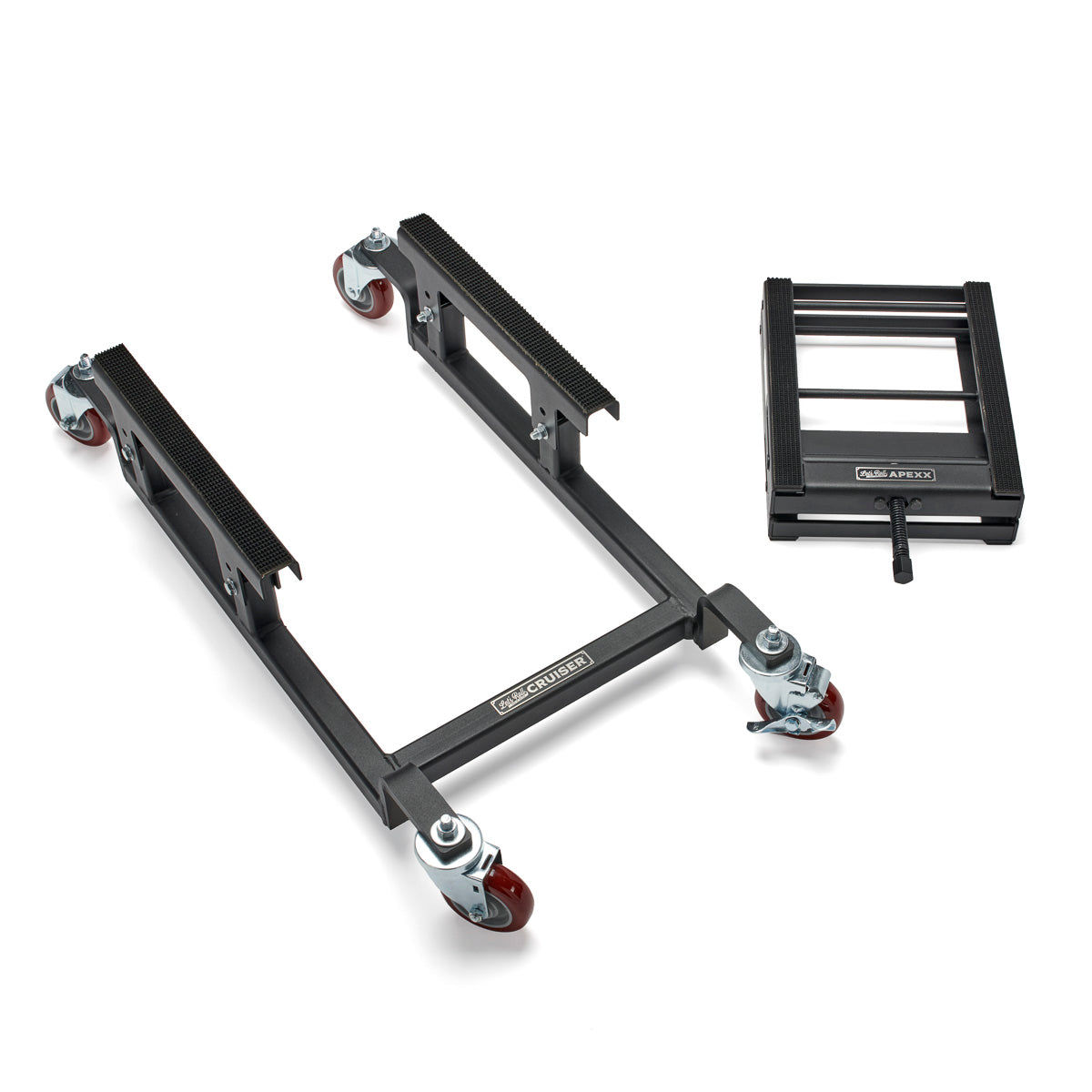
Using the Let’s Roll Cruiser Motorcycle Dolly changes this completely.
Instead of muscling a 700+ pound bike into place, you can:
-
Roll it into the center of your garage
-
Align it perfectly level
-
Rotate it slightly for better access
-
Move it mid-job without strain
The oil change itself doesn’t change.
Your control over the workspace does.
And that control prevents spills, awkward body positioning, and rushed mistakes.

Step 3: Remove The Drain Bolt
Locate the oil drain bolt under the engine.
Place the drain pan directly below it.
When the bike is properly positioned and stable, aligning the pan is simple. When it’s tight against a wall or leaning awkwardly, spills are far more likely.
Loosen the bolt carefully and allow the oil to drain completely.
Take your time.
This is not a rushed step.
Step 4: Replace The Oil Filter
Once the oil flow slows:
-
Remove the oil filter
-
Ensure the old gasket comes off
-
Lightly oil the new filter gasket
-
Install the new filter per torque specification
This is another moment where positioning matters.
When the bike can be rolled and adjusted easily, you can stand correctly, see clearly, and avoid over-tightening or cross-threading.
The dolly doesn’t change the mechanics of the task.
It improves the ergonomics of the task.
That matters more than most riders expect.
Step 5: Reinstall The Drain Bolt And Refill Oil
After oil fully drains:
-
Reinstall the drain bolt
-
Torque to specification
-
Refill with the correct oil amount
-
Replace the fill cap
Because the motorcycle can be positioned level on the dolly, oil level checks are more accurate.
You’re not guessing based on lean angle.
Precision improves when the bike sits correctly.
Step 6: Start The Engine And Check For Leaks
Start the motorcycle briefly.
Inspect around:
-
The drain bolt
-
The oil filter
When the bike is positioned in open space and easy to access, leak checks are clear and fast.
Shut the engine off and re-check oil level after a minute.
Then roll the bike smoothly back into storage position.
No awkward backing.
No multi-point turning.

Why Most Riders Avoid Doing Oil Changes At Home
It’s rarely because they don’t know how.
It’s because:
-
Their garage is cramped
-
The bike is heavy
-
Moving it feels risky
-
Positioning is frustrating
-
Cleanup feels messy
The mechanical steps are easy.
The physical setup is what discourages consistency.
When the bike is difficult to move, riders delay maintenance.
When positioning is effortless, oil changes become routine.
How The Let’s Roll Cruiser Dolly Improves Every Maintenance Task
The Let’s Roll Cruiser Dolly is not just for storage.
It improves:
-
Oil changes
-
Tire inspections
-
Brake checks
-
Chain cleaning
-
Full detailing
-
Garage organization
It allows you to:
-
Move the motorcycle with precision
-
Position it exactly where you need it
-
Maintain full control in tight spaces
-
Eliminate awkward strain
If you maintain your motorcycle even twice per year, the convenience compounds quickly.
Instead of fighting your garage, you control it.
Maintenance Is Easier When Setup Is Right
There is a difference between:
Changing your oil.
And changing your oil comfortably, safely, and without frustration.
Riders who maintain their bikes consistently almost always have one thing in common:
Their garage setup works for them.
If your current oil change process involves:
-
Dragging the bike into place
-
Leaning awkwardly
-
Hoping the drain pan lines up
-
Avoiding moving the bike because it’s heavy
Then your setup is slowing you down.
The Bottom Line
Changing motorcycle oil at home is simple.
Doing it efficiently depends on how your bike is positioned.
When your motorcycle can be rolled precisely into place, leveled correctly, and moved without strain, maintenance becomes faster, cleaner, and something you actually stay on schedule with.
If you’re serious about maintaining your motorcycle properly, the Let’s Roll Cruiser Motorcycle Dolly isn’t an accessory.
It’s a smarter way to control your garage and make every oil change easier.
Stop wrestling your bike.
Start positioning it with precision.