With a cold front moving in this week, a lot of riders are asking the same question they ask every fall and winter:
Is it still worth riding — and if so, what gear actually makes a difference?
Cold-weather riding doesn’t fail because riders lack toughness. It fails because the wrong setup creates discomfort, distraction, and fatigue. When your hands go numb, your core tightens up, and your focus shifts from the road to how cold you are, riding stops being fun — and stops being safe.
The right gear helps. But just as important is how easily you can prep your bike, check key components, and get in and out of the garage when temperatures drop. When it’s cold, even simple tasks like inspecting tires, checking lights, or repositioning your bike can feel miserable if your setup makes it difficult.
This guide breaks down what riders actually benefit from when temperatures fall — and what often sounds good but ends up being a waste.
What Actually Matters When Riding in the Cold
Before talking about specific gear, it helps to understand what cold really does to riders.
Cold affects reaction time, especially in hands and feet. It increases muscle tension, which reduces smooth control inputs. And it steals mental focus as discomfort becomes a constant distraction.
The goal of cold-weather riding gear isn’t to feel cozy like you’re indoors. It’s to maintain control, awareness, and endurance — and to make the entire process of riding, from prep to parking, feel manageable instead of exhausting.
Gear That’s Worth It
Heated Gloves or Heated Liners
If there’s one upgrade riders consistently say they waited too long to buy, it’s heated hand gear.
Hands are exposed, stationary, and constantly in the wind. Once they go numb, grip strength and precision disappear quickly — especially in stop-and-go riding or longer highway stretches.
Heated gloves or liners are worth it because they warm from the inside out. They preserve finger dexterity instead of just trapping cold air. And they reduce fatigue over the course of a ride.
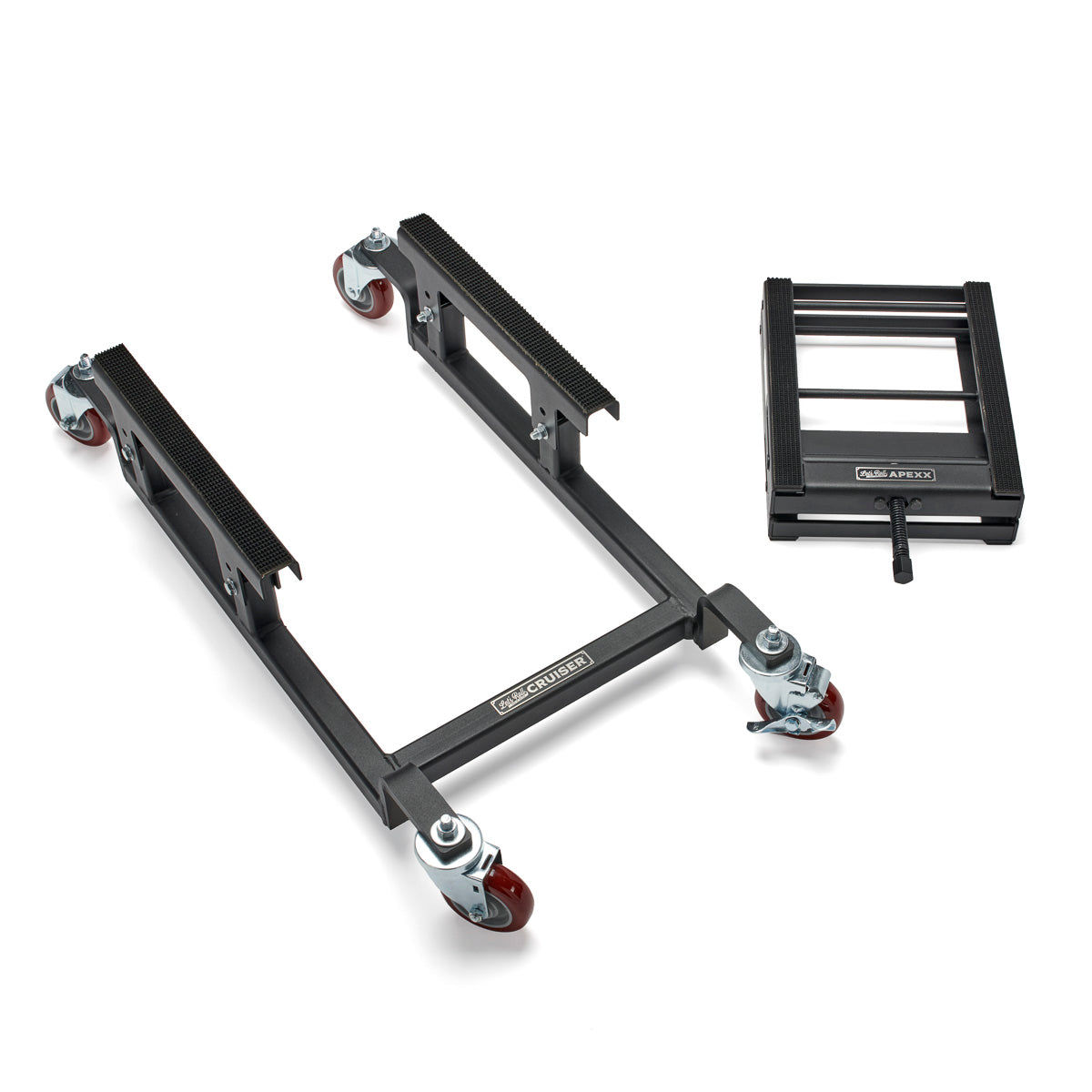
They also make pre-ride prep easier. When your hands stay warm, checking lights, adjusting controls, or rolling the bike into position doesn’t feel like a punishment before you even start the ride — particularly if you use tools like the Let’s Roll Lift to elevate your bike for inspection or the Let’s Roll Cruiser Motorcycle Dolly to easily reposition it in a cold garage.
Proper Base Layers (Not Just “Thermal” Shirts)
Base layers are one of the most misunderstood pieces of cold-weather gear.
Cotton is a mistake. It traps moisture and loses insulation quickly. A proper base layer regulates temperature by managing moisture, not by adding bulk.
Good base layers allow you to move freely while staying warm, which matters when you’re climbing on and off the bike, leaning over it for quick checks, or lifting it slightly to position it properly — again, something made easier if your bike is elevated and stable on a dedicated lift.
Windproof Mid-Layers
Wind doesn’t just make you cold — it actively pulls heat away from your body, especially at speed.
A quality windproof mid-layer stops heat loss without turning you into a bulky mess. It works under existing jackets and reduces chest and core fatigue on longer rides.
This becomes even more noticeable when you’re riding during sudden cold snaps. Riders who stay warm are far more likely to slow down, check their bike thoroughly, and ride intentionally — rather than rushing through everything just to get out of the cold.
Insulated, Weather-Sealed Boots
Cold feet end rides early. Once circulation drops, it rarely comes back.
Insulated, weather-sealed boots help maintain feel at the controls while blocking wind and moisture. Waterproofing matters more than many riders realize, especially when cold pavement and road spray are involved.
Cold-weather boots also make garage work easier. When you’re not fighting frozen toes, it’s much easier to take a few extra minutes to check tire pressure, spin the wheels, or move the bike into a better position before heading out — again, something that’s far less of a chore when using a lift and dolly system you trust.
Neck Gaiters and Balaclavas That Actually Seal
The neck is a major heat-loss point, and small gaps here undermine the rest of your gear.
A proper neck gaiter or balaclava blocks wind entering the jacket, stabilizes core temperature, and reduces helmet turbulence.
This is one of the simplest upgrades riders make — and one of the most noticeable when temperatures drop quickly, like during the cold front hitting this week.

Gear That’s Often a Waste
Bulky “Arctic” Jackets
Huge, heavily insulated jackets seem logical but they often create more problems than they solve.
They restrict movement, trap moisture, and add unnecessary weight. Riders end up sweating during low-speed riding and freezing once moisture builds up.
Layering intelligently beats bulk every time, especially when you’re moving on and off the bike or adjusting it in tight spaces.
Disposable Hand and Foot Warmers
Disposable warmers sound convenient but rarely hold up in real riding conditions.
They provide inconsistent heat, shift around inside gloves or boots, and stop working when you need them most. They’re fine in emergencies but unreliable for regular cold-weather riding.
Thick Gloves Without Active Heating
Thick gloves without heat often reduce control without solving the cold problem.
Riders lose throttle feel, struggle with braking precision, and still end up cold once wind cuts through. Warmth without dexterity is not a win.
Cheap Rain Gear Used as Cold Gear
Rain gear blocks wind, but cheaper versions trap moisture, flap at speed, and restrict movement.
Cold-weather riding demands gear designed for stability and comfort, not improvised solutions that introduce new problems.
Riding Tips That Matter During Cold Fronts
With a cold front arriving this week, preparation matters as much as gear.
Shorten your ride expectations. Cold drains energy faster, so plan shorter rides and take breaks sooner than you would in warm weather.
Warm up before you ride. Cold muscles react slower, and a few minutes of movement improves control immediately.
Check tire pressure before riding. Cold temperatures reduce pressure, and riding on underinflated tires in cold conditions compounds risk.
This is also where having your bike positioned easily matters. Tools like the Let’s Roll Lift make pre-ride inspections simpler and safer, and the Cruiser Motorcycle Dolly helps you position your bike for prep or storage without wrestling it in cold conditions.

Comfort Is a Safety Feature
Cold riders rush. They tense up. They make mistakes.
Comfort allows patience. It encourages riders to slow down, do things correctly, and ride with intention — especially during unpredictable weather.
When your gear works and your setup makes preparation easy, riding in colder conditions feels like a choice instead of a chore.
The Bottom Line
Cold-weather riding isn’t about being tough. It’s about being smart.
The right gear preserves focus, maintains control, and extends your riding season safely. The wrong gear creates discomfort that no amount of grit can overcome.
As temperatures drop this week, riders who stay on the road will be the ones who remove friction wherever they can — from what they wear to how easily they can prep, position, and care for their bike before and after the ride. Using tools that make these steps easier — like a Let’s Roll Motorcycle Lift or Cruiser Motorcycle Dolly — lets riders focus on what matters most: the ride itself.